




 March 4, 2025
Exiting the off-ramp from Don Valley Parkway, entering Rosedale via Castle Frank Road, the grandeur of Norman Seagram’s 30-room stone mansion is hard to miss.
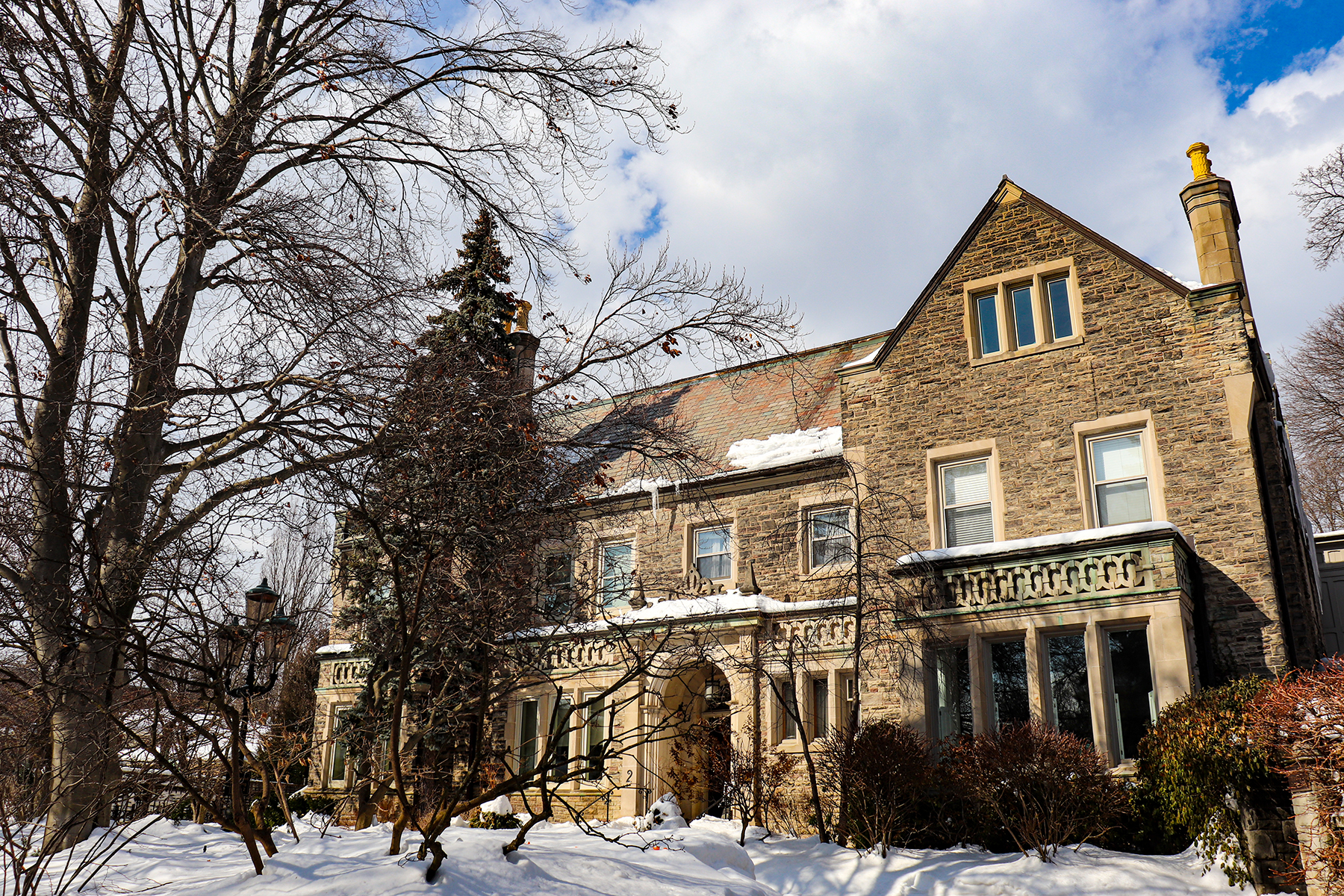
Perhaps the best part of the Seagram mansion is not the mansion itself.
After posting the coach house at Thom House (1881), people reached out and suggested a deeper dive into the rabbit hole of coach houses.
Although his father owned the largest distillery at one point in Canada, Norman Seagram made his fortune as a stockbroker.
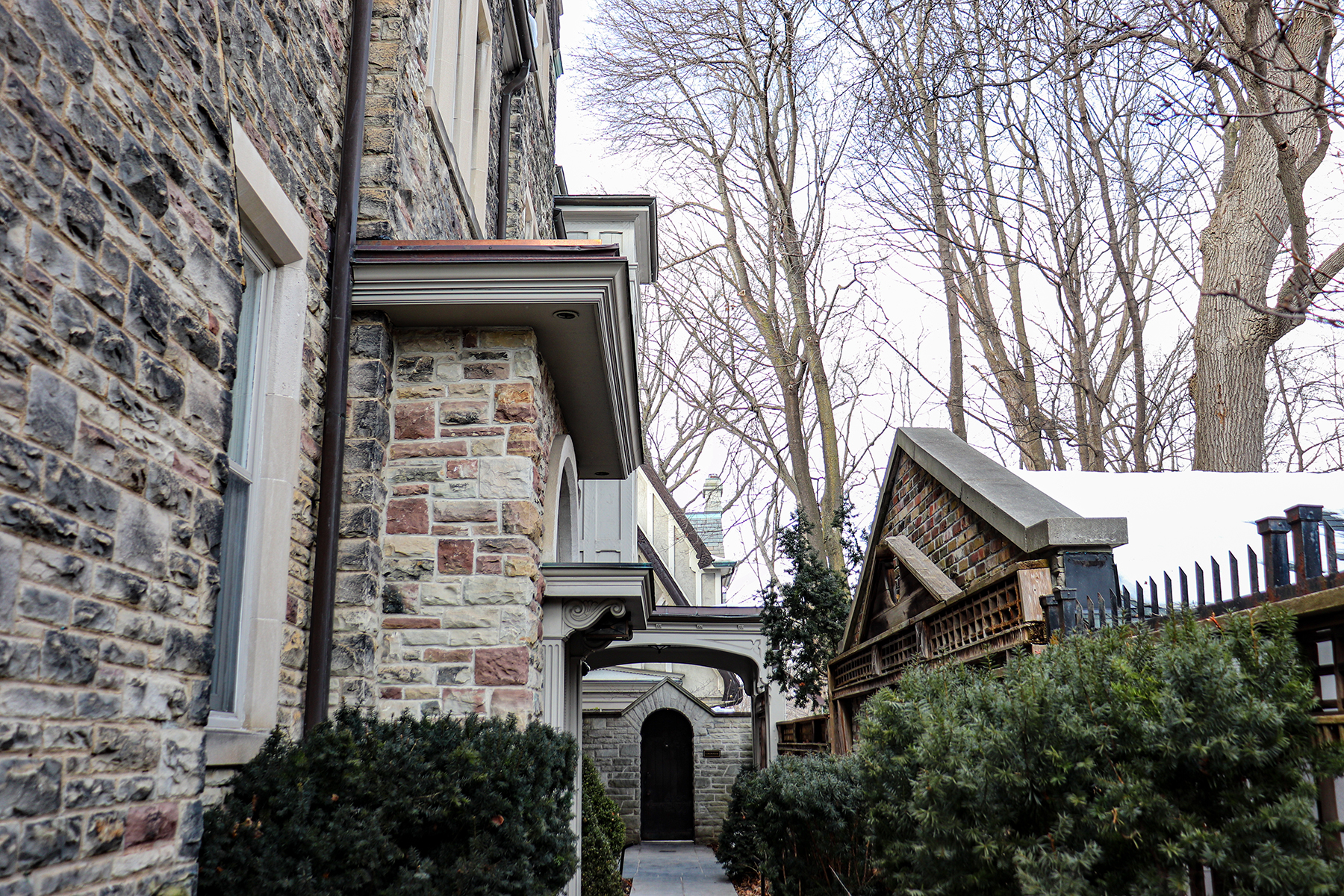
The 3-storey coach house is bigger than even some main houses in Rosedale. The stone wall and arched doorway match the stonework of the main house.
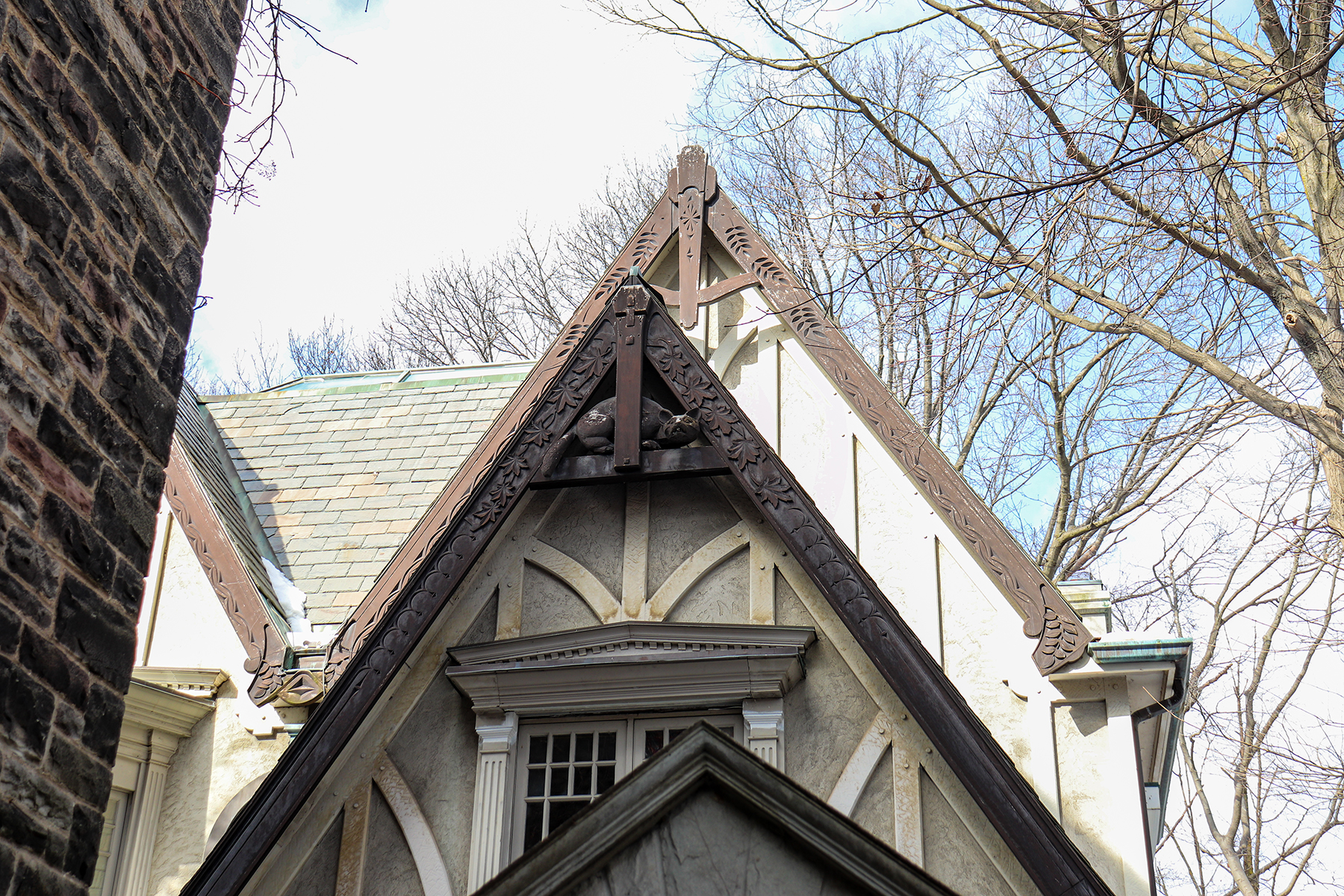
French windows have replaced the original carriage doors. The roof features Tudor Revival timber décor.
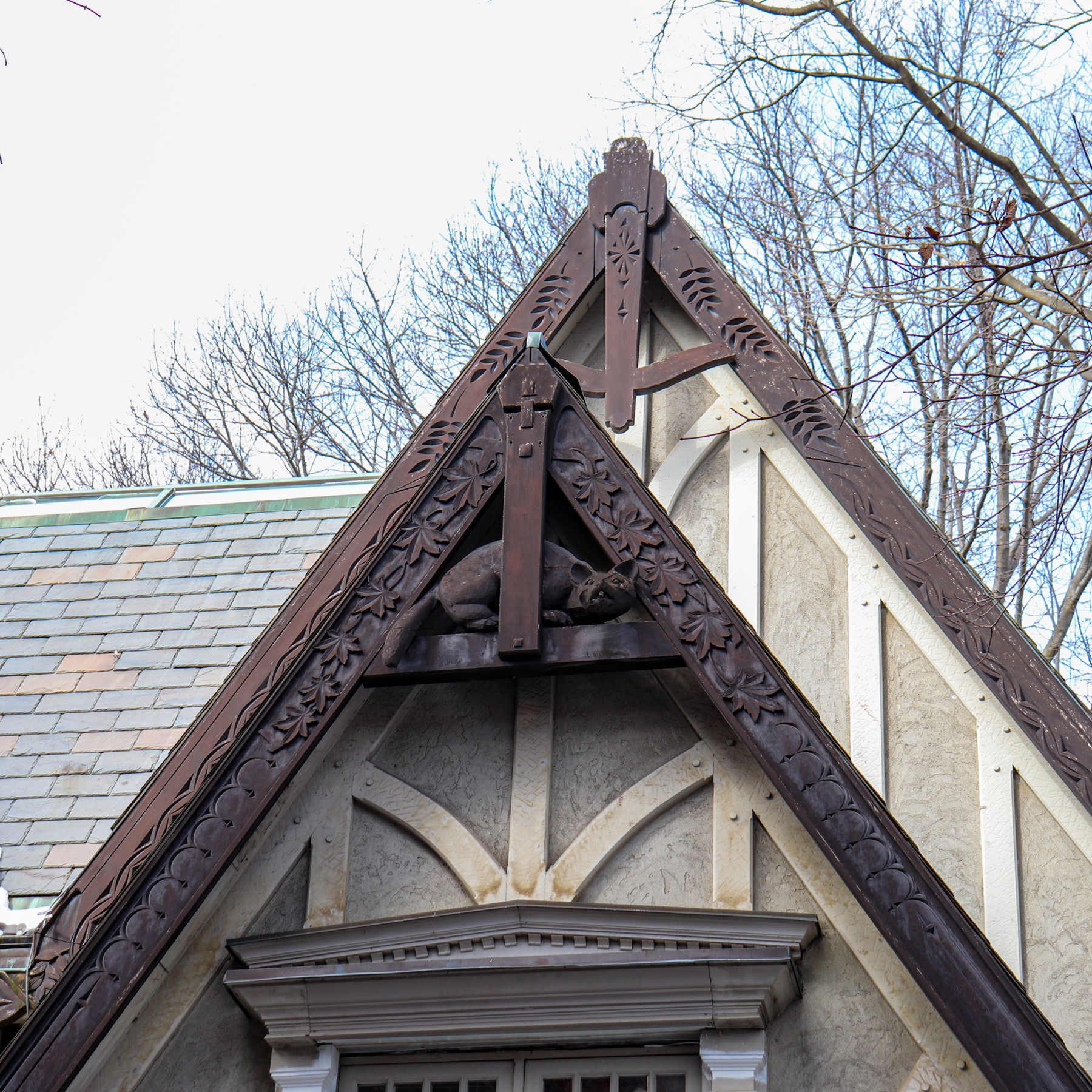
This coach house features perhaps the most elaborate gable trim design in all of Toronto, even though it is off the main street, and almost completely out of sight.
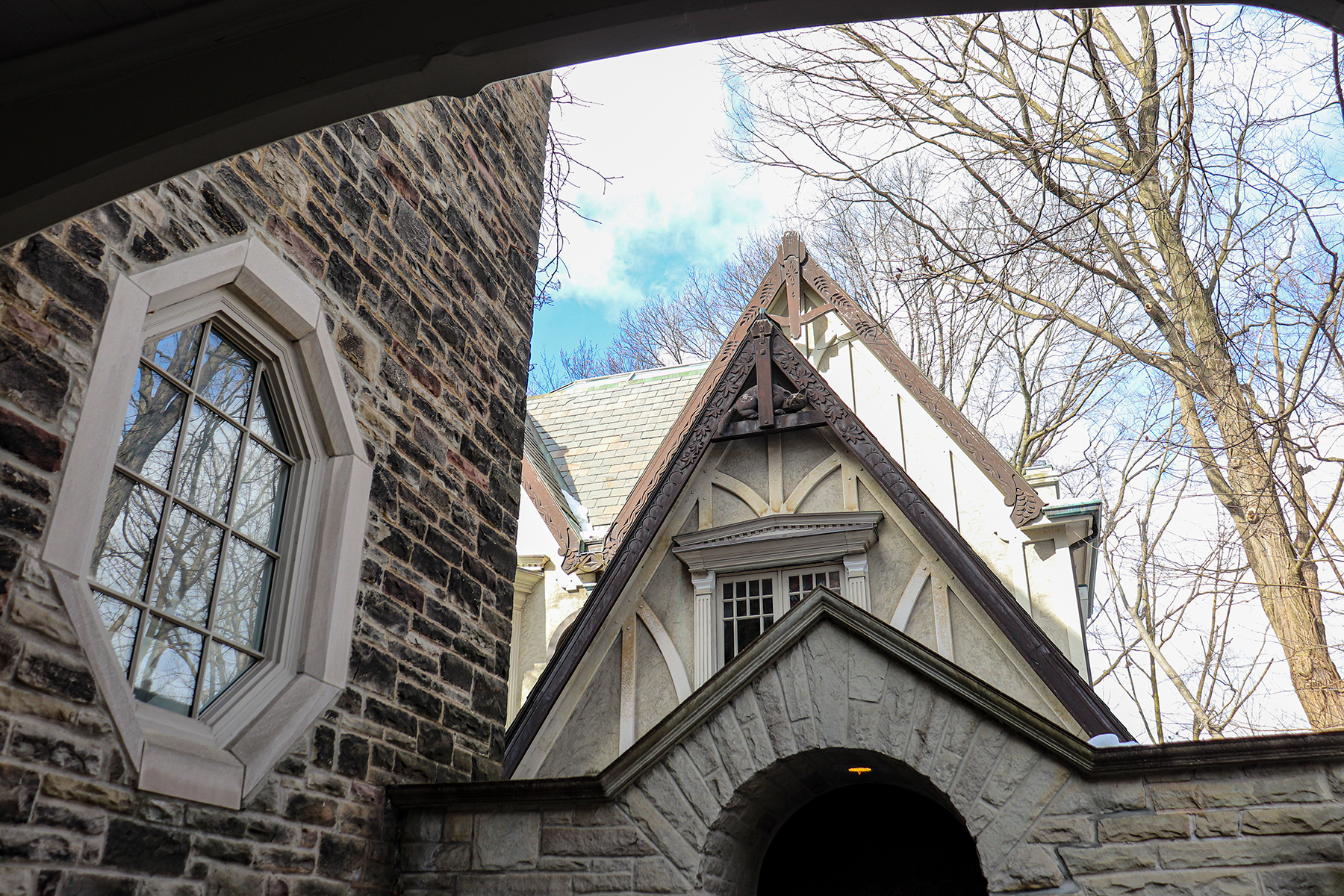
Designed by a Swiss sculptor, maple leaves are craved into the gable trim accompanied by a stone marten below with its tail hanging out.
Inside the house, the grand staircase with mahogany railings flows and curves from the top floor to basement. Fluted columns are erected to hide structural beams. Everything has been designed as if it was some museum, not a mere coach house.
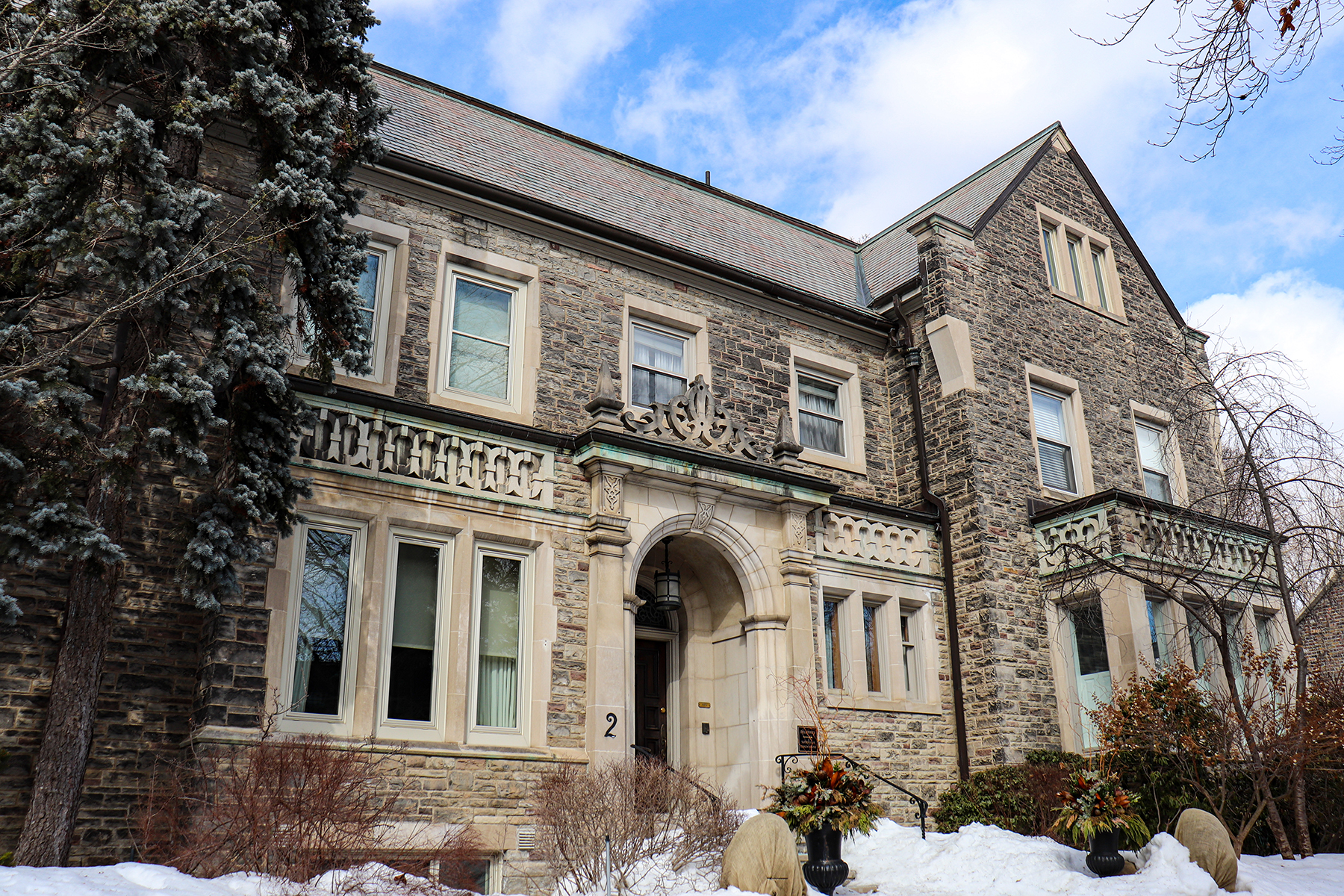
Before the era of when “everyone” had a car, horse-drawn carriages and early “horseless” carriages were a novelty. The coach house was not just your everyday “garage”, it was quite often built elaborately, to mirror the main house.
The Seagram Coach House is like the secret menu at your favorite restaurant, or the hidden painting behind Mona Lisa.
Hawthorne Gardens, Rosedale
 Prev Post