




 August 9, 2025
Popular opinion may say Toronto is not as architecturally rich as cities like London, New York or Paris.
While this may be true, Toronto does have a lot of hidden architectural gems that are unique to Toronto and not found anywhere else.
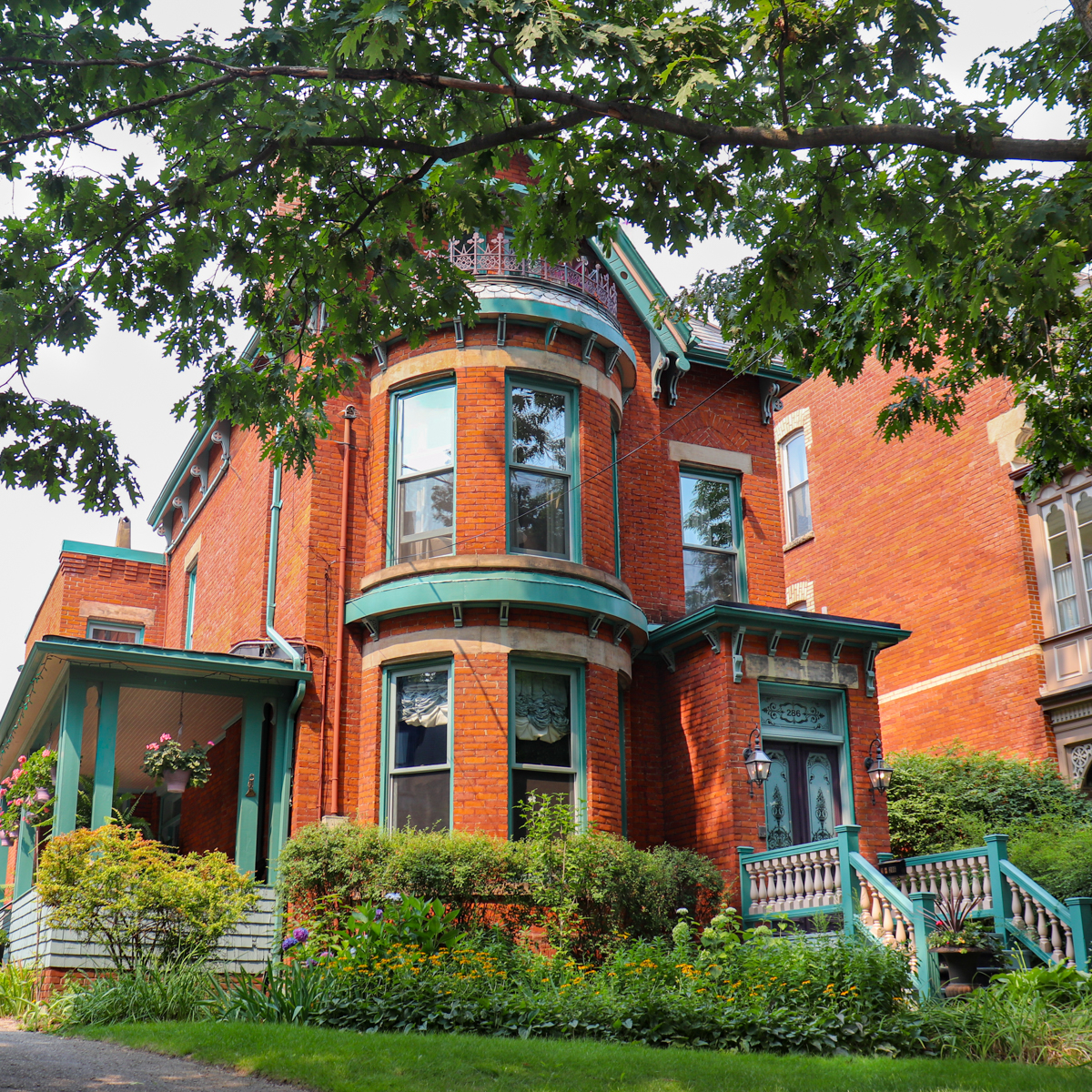
Sometimes if you take a closer glance at the same street, back alley or mews that you usually go past, there are always flowers for those who want to see them.
Let’s go over a few architectural styles commonly found in Toronto heritage houses.
Georgian / Georgian Revival
A Georgian house puts a strong focus on symmetry. The windows, doors, front façade are evenly spaced. It is a style of architecture that had prevailed in England since the mid-18th century.
The exterior is often made from brick or stone, displaying self-conscious restraint and quiet dignity. The front door is always placed dead center, sometimes raised off the ground under a small portico, framed by decorative elements like columns attached to the wall or a formal portico, and a transom (a window above the door), giving a house a grand and welcoming feeling.
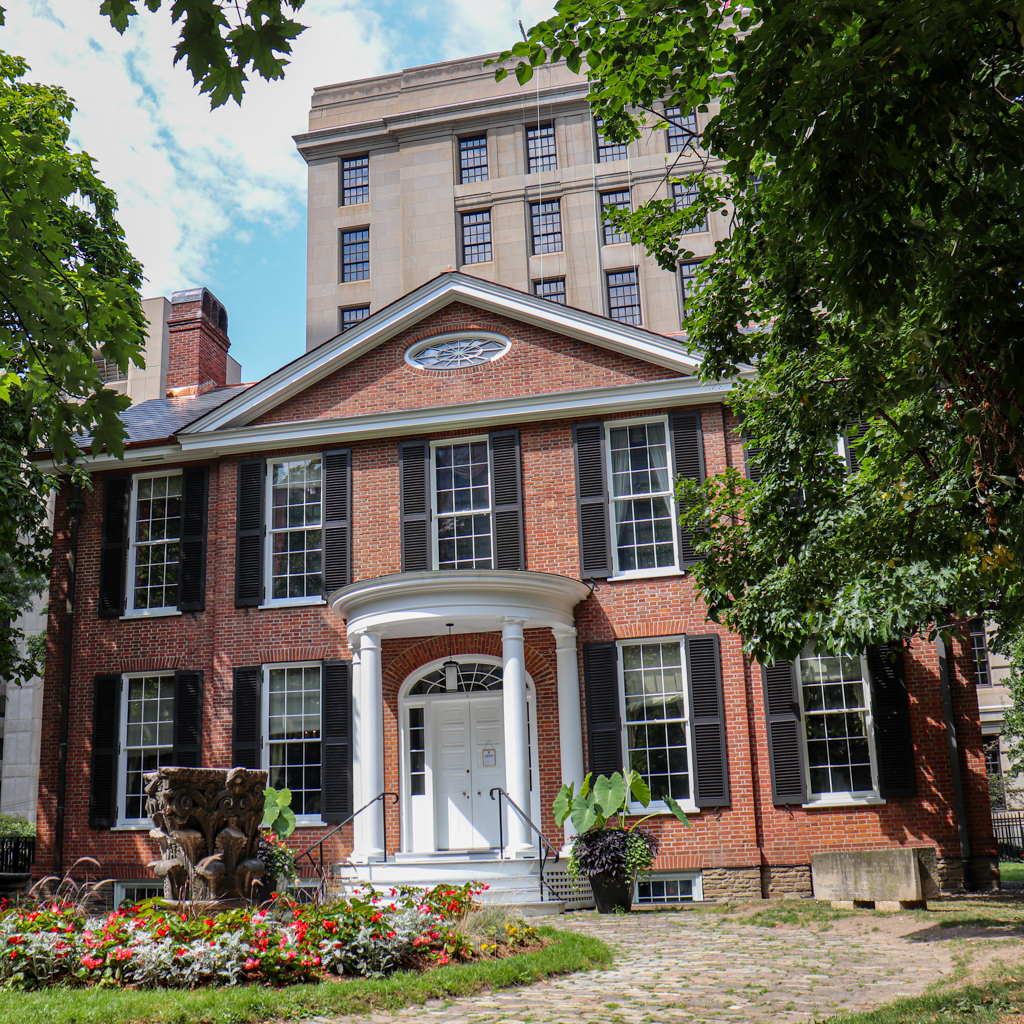
A notable example of a traditional Toronto Georgian heritage house is Campbell House (1822) at 160 Queen Street West, Downtown Toronto. This house was built for Sir William Campbell, then Chief Justice of Upper Canada.
“Like all things stylish, residential architecture goes in circles, what seems hopelessly outdated to one generation is the darling of the next.” Old Toronto Houses by John Devisser
With nostalgia in the air, builders, developers and wealthy Toronto families embraced the style once again in early 1900’s Toronto.
A Georgian Revival house draws inspiration from the original Georgian period (c.1730’s – 1830’s). The revival period built on the original Georgian formula. It combines elegance, symmetry and classic proportion of Traditional Georgian style and expand it on a larger scale, with a focus on “luxury”, sometimes referred as “Stockbroker Georgian” style.
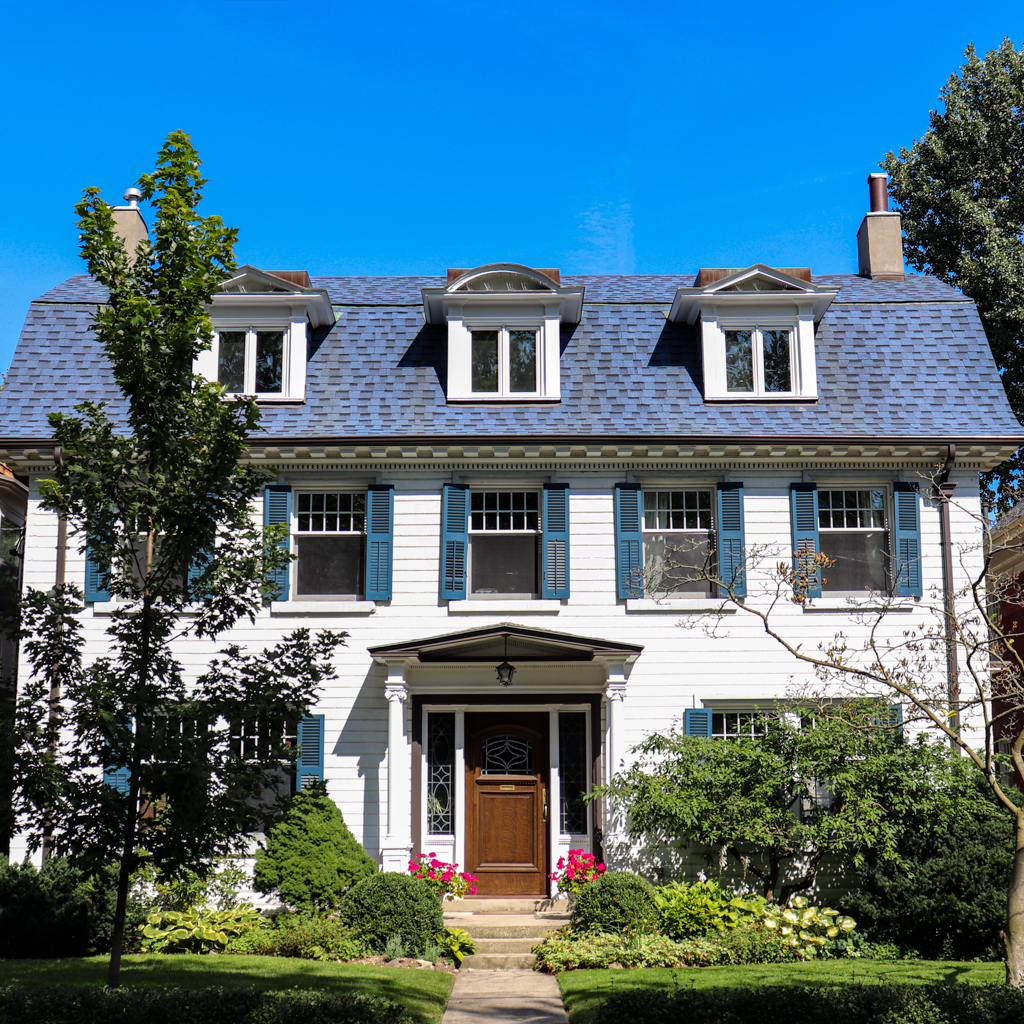
Georgian Revival houses continue to use brick and stone for the exterior, but modern materials like stucco and even concrete, such as Beaumont Jarvis House (1906) at 41 Nanton Avenue, Rosedale were also used in some houses built in the early 20th centuries. Elements of Greek Revival, such as columns and decorative pilasters were also used.
As an extension to its loyalist roots, Toronto is one of the only North American cities where Georgian style architecture remained popular into early 1920’s, where examples of Georgian Revival houses can be found along on Chestnut Park, Rosedale and Lawrence Crescent, Lawrence Park and further afield in North York.
Regency
Compared to the “formality” and “seriousness” of Georgian style, the Regency style is less formal and more relaxed, diverging from the established customs. No longer is the front door the center of attention. Instead, the focus is the verandah, a design borrowed from European and British Empire colonies in the Far East.
The Regency style typically combine lighter colors and materials to give it an airier and romantic feel.
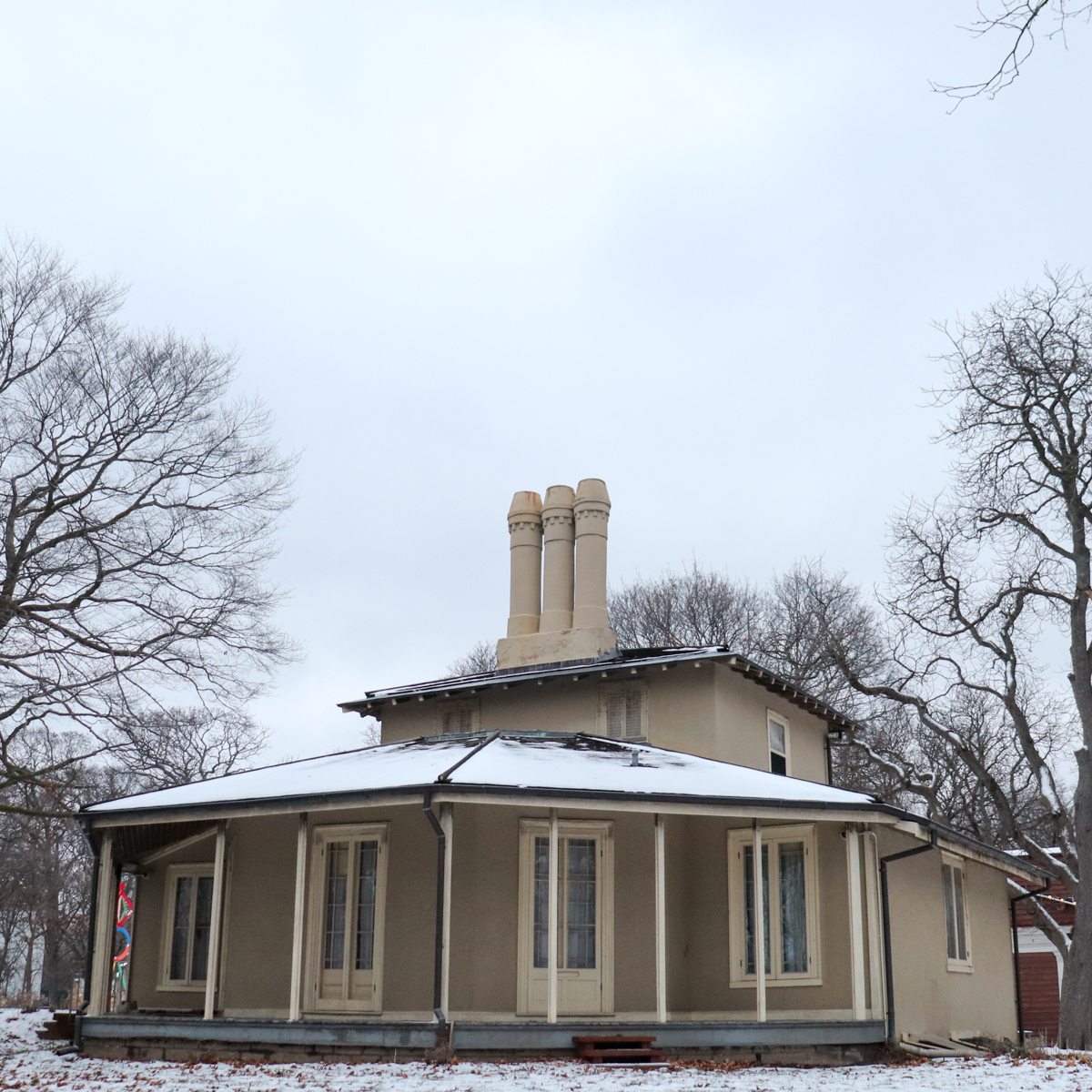
A notable example of Regency style heritage house in Toronto is Colborne Lodge (1836) at 11 Colborne Lodge Drive, High Park. Built in 1836 by architect John Howard, Colborne Lodge does not conform to the standard center hall plan of a traditional Georgian house. The polygon-shaped verandah is the center of attention. The house is now a museum open to the public.
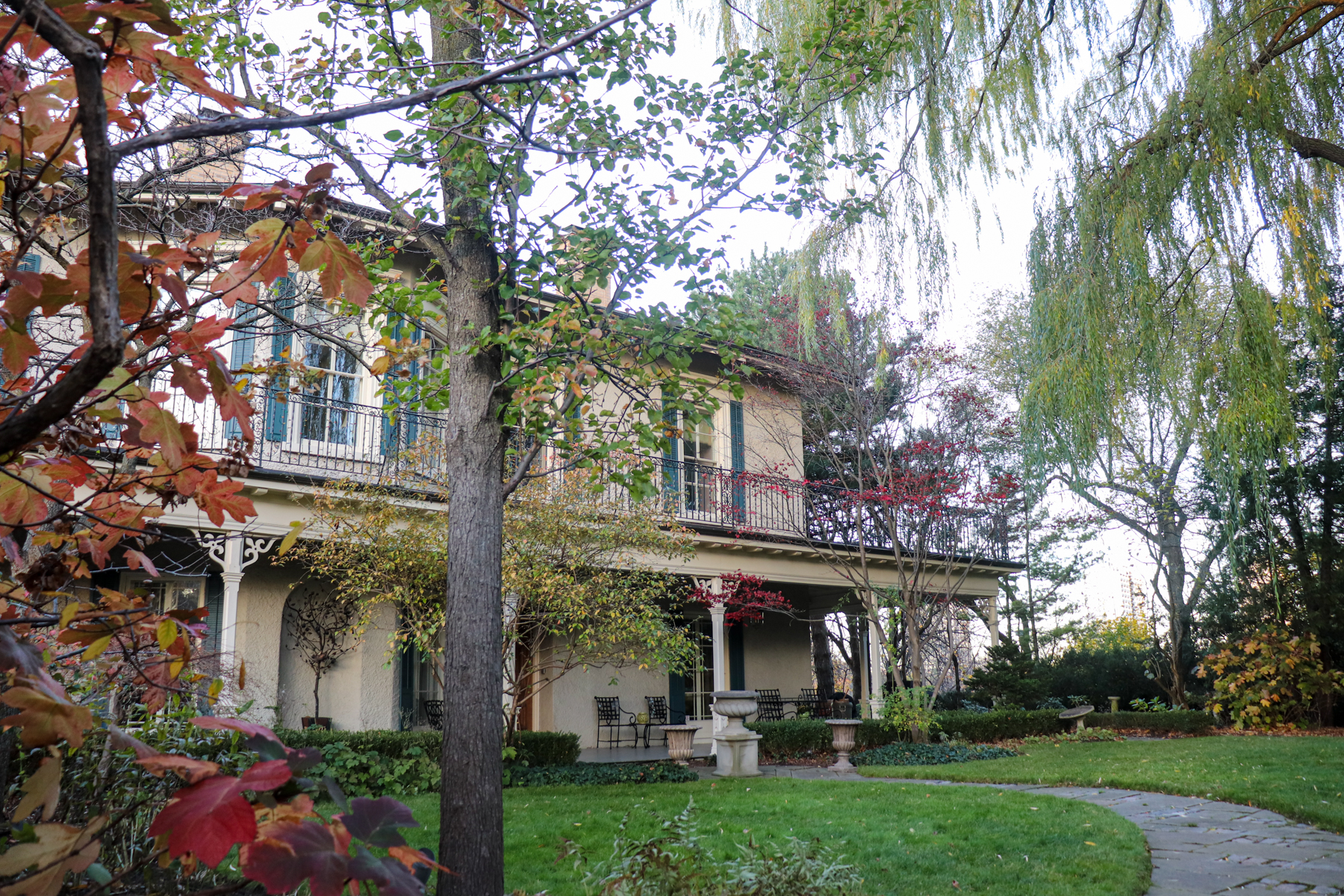
Another notable example of a Regency style house is Drumsnab (1834) at 5 Drumsnab Road, Rosedale. Like Colborne Lodge, it uses a lighter color, with a white façade, an off-center entrance, and a wide wrap-around verandah that goes around the house. Drumsnab’s humble and reserved styling predates most 1920’s stockbroker mansions by nearly 100 years, a time when Rosedale was considered “rural” Toronto. It is also the oldest house in Rosedale.
Pre-Confederation
In Canadian history, the term “Pre-Confederation” refers to the period before the Confederation of Canada in 1867.
Perhaps not referring to a specific style, but more to a specific period and a moment in time. Generally, a Pre-confederation house in Toronto or GTA (Greater Toronto Area), would refer to a small house, cottage or dwelling of a lower and middle-class family.
Because 1867 is a such a long time ago, not many of these houses still exists today. Within this group of houses, houses that are directly linked to the Upper Canada Rebellion in 1837 (which would ultimately lead to the federation of Canada) are considered even more historically significant.
A notable example would be Mackenize House (1857) at 82 Bond Street, which belonged to William Lyon Mackenize who led the Upper Canada Rebellion in 1837. The house is now a museum open to the public.
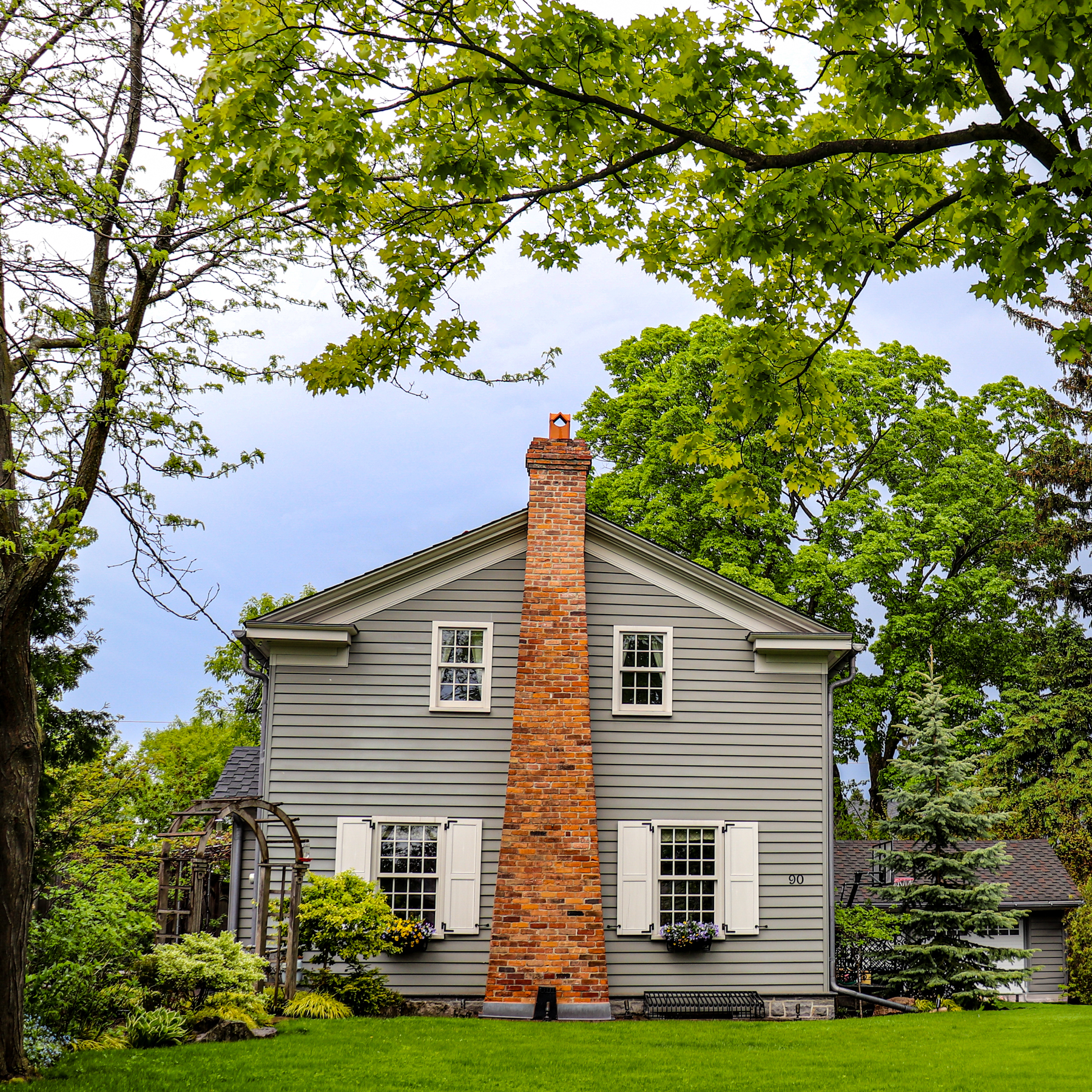
Another notable example is Shepard House (1835) at 90 Burndale Avenue, which belonged to Joseph Shepard. This house is one of the few buildings left with direct links to the Upper Canada Rebellion in 1837. Joseph Shepard and his wife Catherine were strong supporters of the political reform led by William Lyon Mackenzie. At the time, colonial Canada was ruled by an elite group of men known as the Family Compact. Soldiers who participated in the rebellion were sheltered at this very house.
Worker’s Cottage
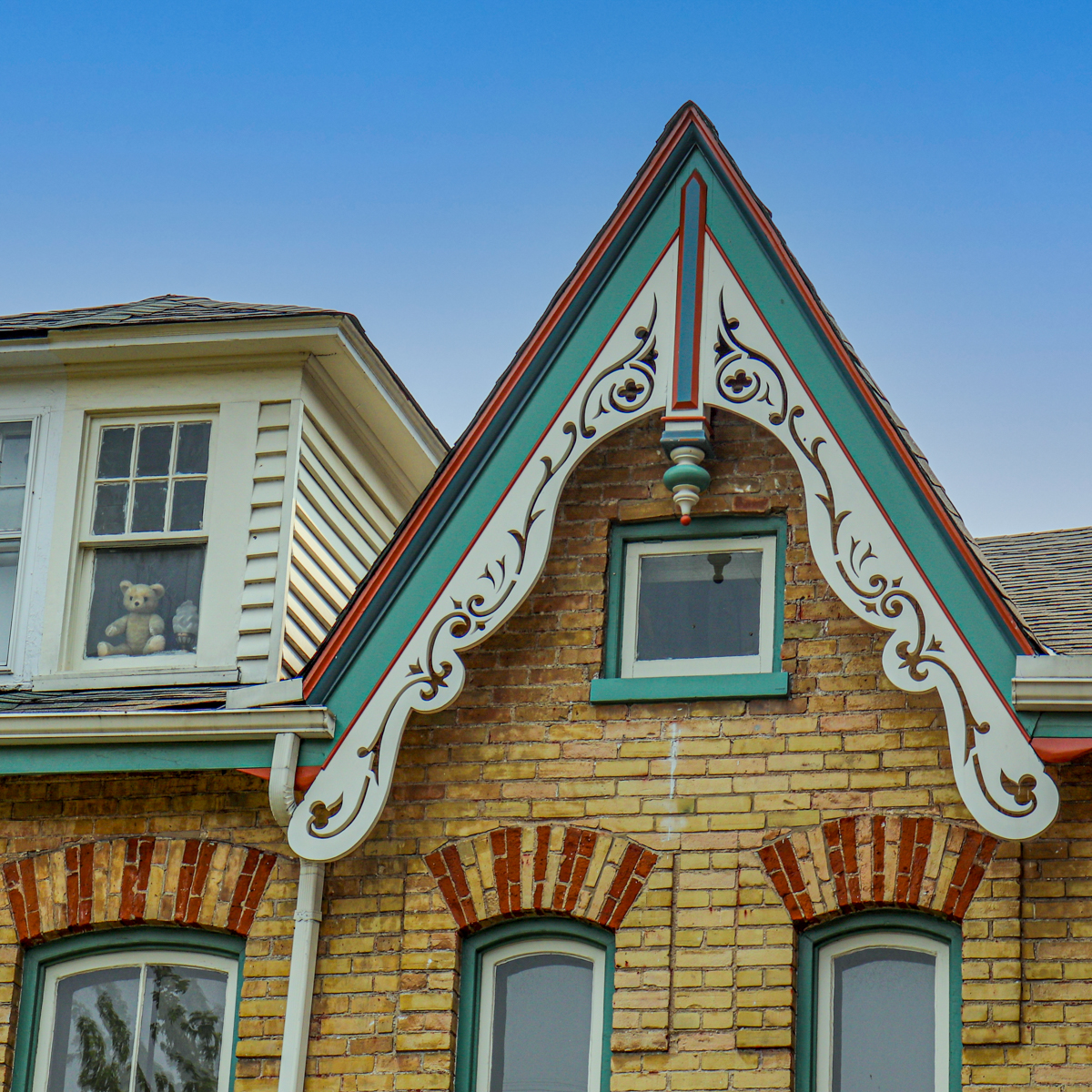
A centered doorway with a single bay window on each side, usually with a lacy Victorian gingerbread for each gable on top. The worker’s cottage is charmingly simple. These are ordinary dwellings usually for workers and laborers.
Cabbagetown and Corktown have an abundance of these cottages, but they can be found further North in the city and even across the province of Ontario as well.
As time progressed, most of these worker’s cottage near Toronto Downtown has succumbed to the wrecking balls of developers. Those that have remained are now cherished heritage designated houses.
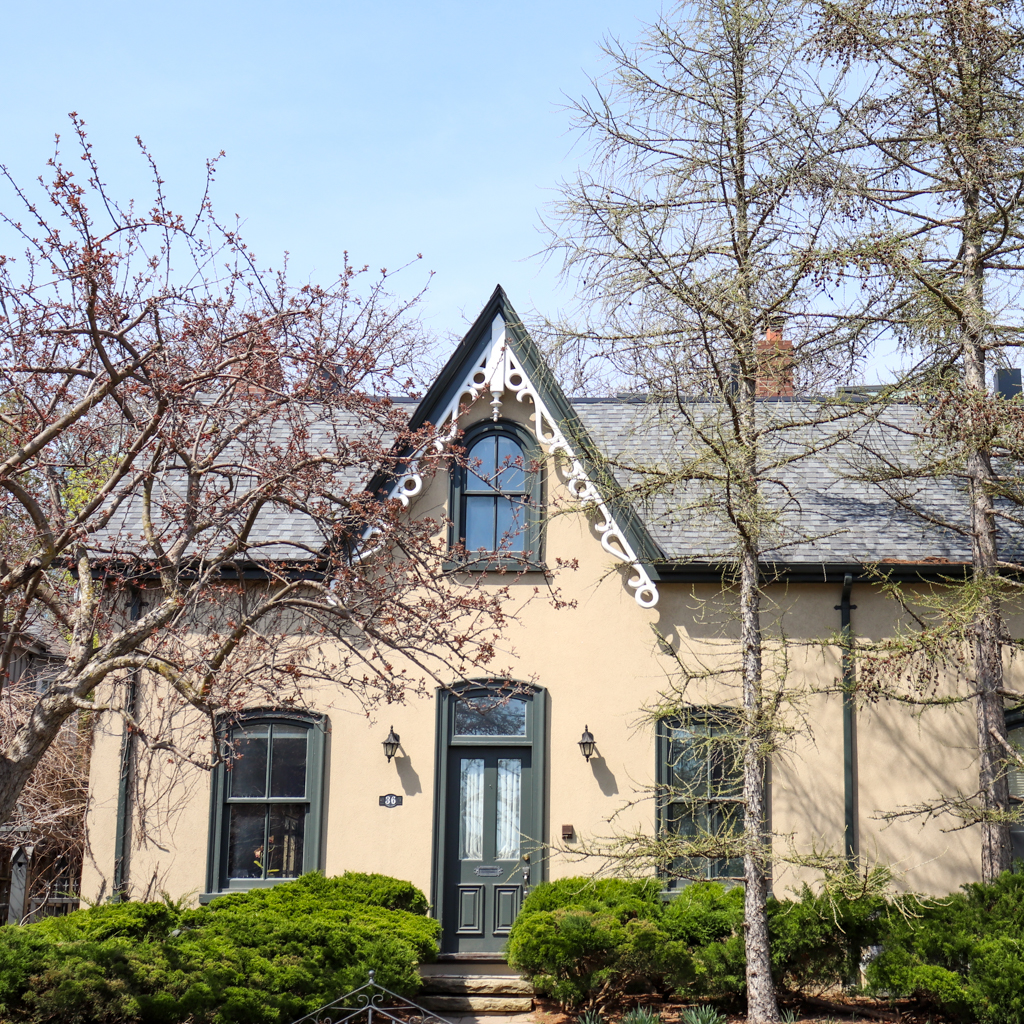
Notable examples are Wellesley Cottages (1887) at 307-311 Wellesley Street East and Amelia Cottages (1873) at 36-40 Amelia Street in Cabbagetown. The front yard of these Victorian era worker cottages provided ample space to grow cabbages and other vegetables, hence the name, Cabbagetown.
Victorian
Just like “Pre-Confederation” heritage houses, the term “Victorian” is more about a specific period during the reign of Queen Victoria (1837-1901) rather than a specific style.
A Victorian-era heritage house may refer to one of the following styles, Second Empire, Queen Anne, Italianate, Gothic Revival, Richardsonian Romanesque, as further explained below.
Second Empire
This is a style that originated from France in the 19th century. It rose to prominence during the Second French Empire under the rule of Nepoleon III, hence the name second empire.
The style was popular in French speaking part of Canada, Quebec, and later spread to Ontario.
A signature design of a second empire house is the mansard roof, named after the 17th century French architect, Francois Mansart. The roof has a square-ish gambrel shape, with elliptical dormers.
This design maximizes interior space in the attic. As the slope angles are usually 60-70 degrees, this provides more headroom on the top floor. The attic space under a mansard roof can be easily converted into a spare bedroom or home office.
Although it is symmetrical like a Georgian style house, Second Empire houses have tall and narrow windows. Due to the mansard roof, the top floor usually has a higher ceiling. The front façade is usually more decorative, with elaborate moldings, cornices and porticos. It is usually more colorful, with decorative stonework, from limestone, granite and sometimes cast iron.
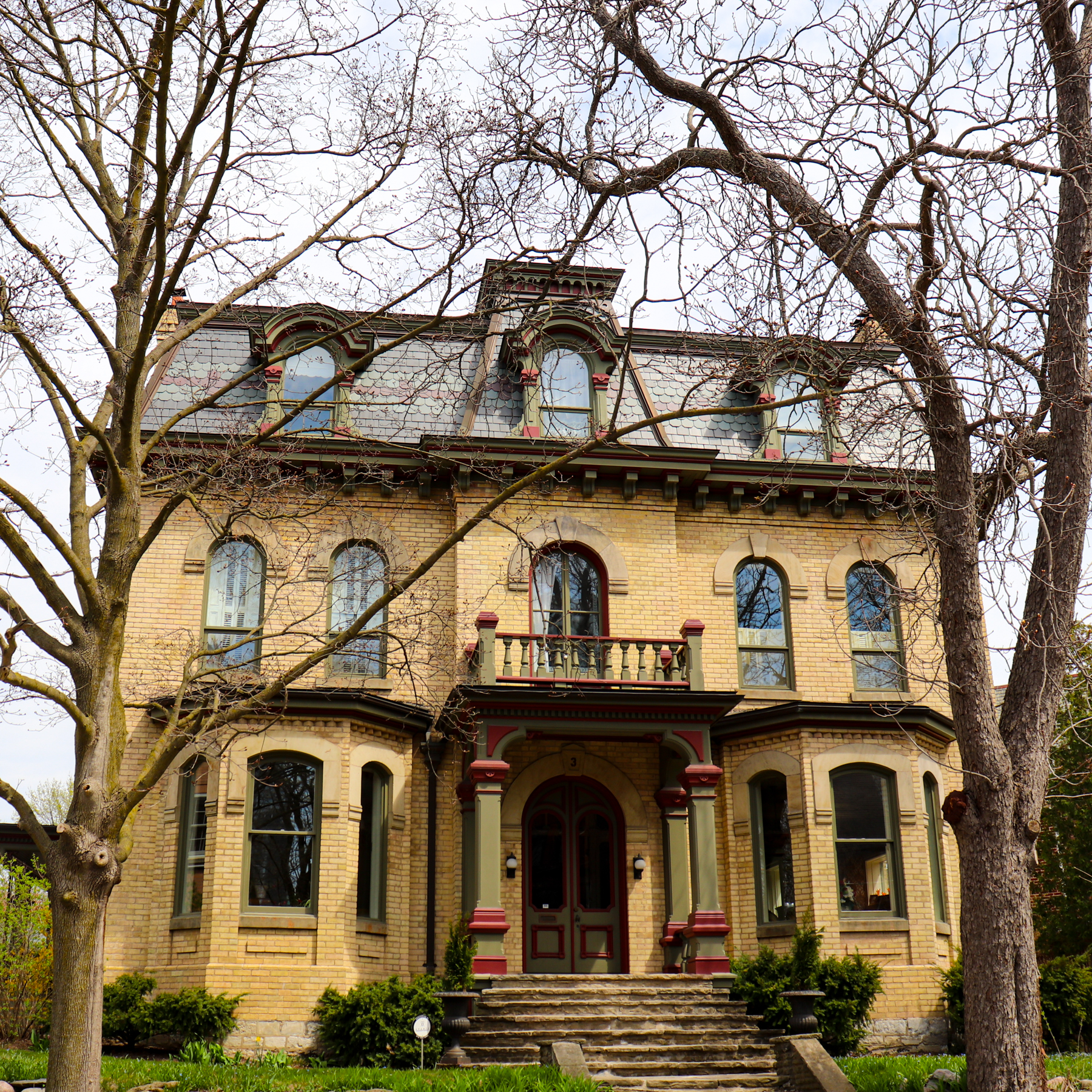
A notable example is Lorne Hall (1876) at 3 Meredith Crescent, Rosedale. Note the more playful use of colors as well, compared to a more traditionally designed Georgian house.
Queen Anne
Contrary to Georgian style and Second Empire style, Queen Anne style shifts the focus to asymmetry with offset entrances and bay windows, and a varied and complex roofline design.
A prominent feature of the Queen Anne style is the round turret and castle-like tower often overlooking the Toronto beloved ravines and Lake Ontario. The turret is often the center of the attention, and it is usually topped with a conical roof to make it even more striking.
Another feature of a Queen Anne home is the wrap-around verandah usually supported by decorative columns and intricate moldings. The interior of a Queen Anne house usually features elaborate floor to ceiling decorative wood panels and stained-glass windows.
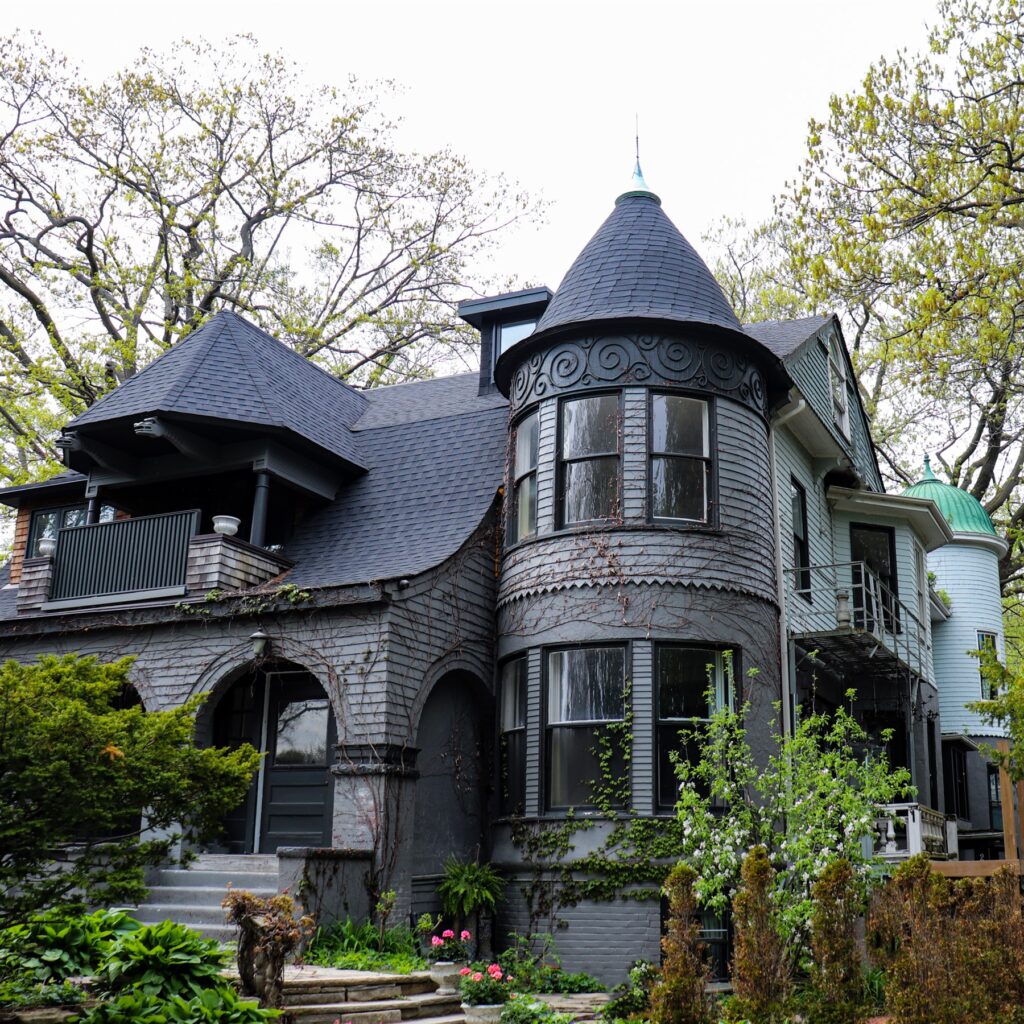
A notable example of a Queen Anne style heritage home in Toronto is Chateau des Quatre Vents (1892) at 3025 Queen Street East, also known as the “Castle of Four Winds”. This castle-like mansion was designed by architect E.J. Lennonx, who also designed Casa Loma, Toronto’s grand castle.
Italianate
As the name suggests, the Italianate style is inspired by a European Italian villa. Although an Italianate villa follows the center-hall floor plan of a Georgian house, their facades and roof lines tend to be irregular with tall and narrow windows and a 2nd floor balcony.
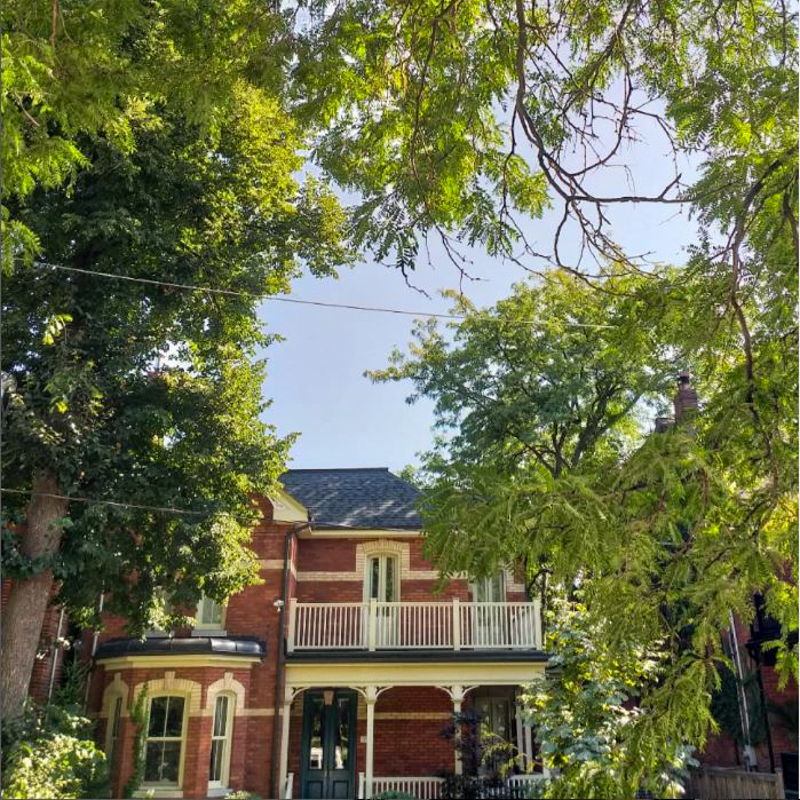
Compared to other Victorian styles, Italianate style is quite rare in Toronto, and a notable example would be James Reeves House (1883) at 397 Carlton Street, Cabbagetown.
Gothic Revival
Originated from European architecture during the Middle Ages from 12th to 16th centuries, the original gothic designs are known for their pointy arches and vertical lines.
The Victorian era saw a revival of this style in residential architecture with signature details like pointed arches, spikes at the end of the gables, intricate motifs along the gingerbread trim, steeply pitched roofs, narrow windows, and vertical tower-like proportions with strong emphasis on height.
English architect, Augustus Pugin, a strong advocate of traditional values of faith and virtues against moral decay of modernity, is often credited of bringing back this design trend in the Victorian era.
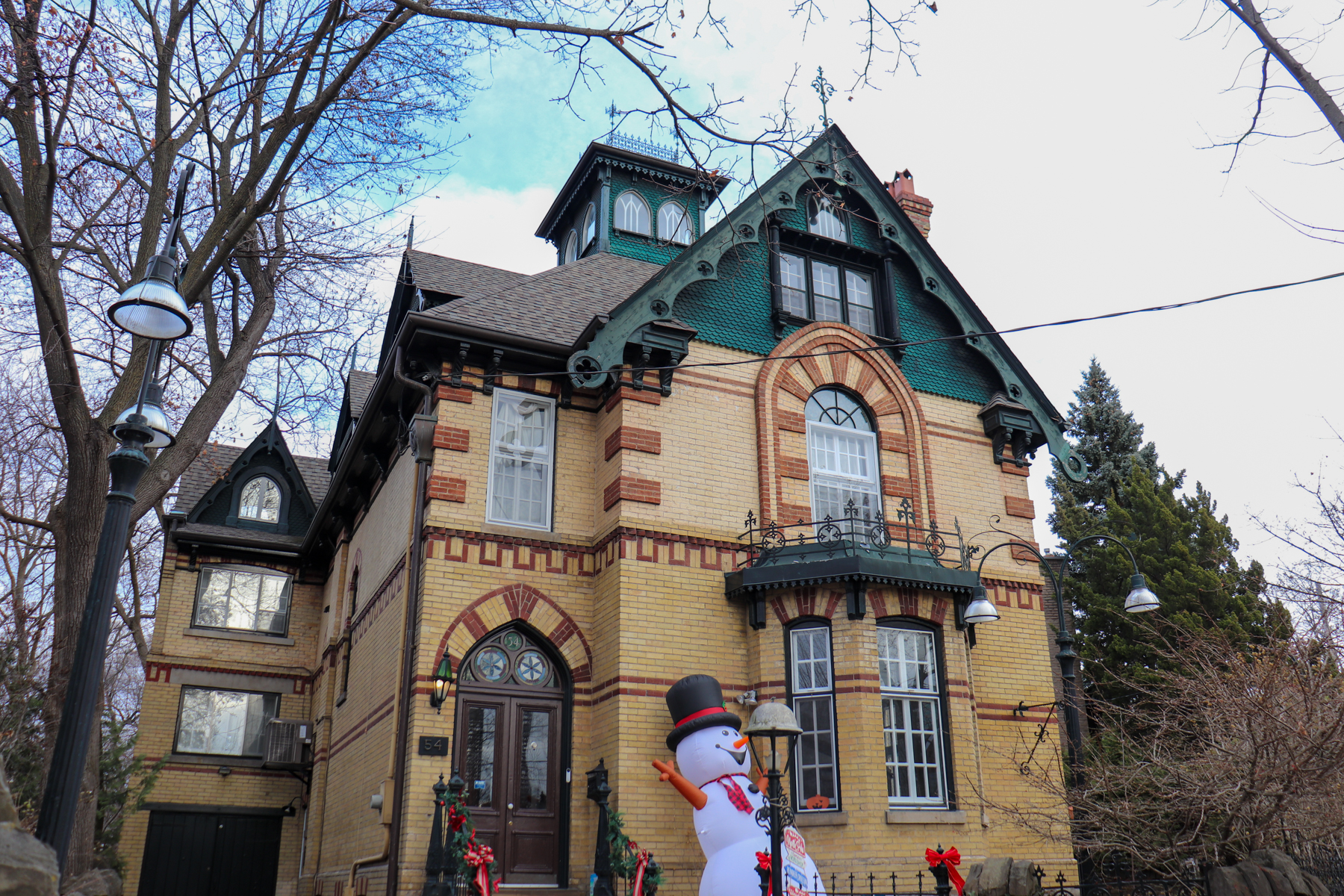
A notable example of a Gothic Revival heritage home in Toronto is Thom House (1881) at 54 South Drive, Rosedale. Probably the most featured house in all of Rosedale, anyone who walks past Thom House, can’t help but stop and admire its intricate details.
When Thom House was built, there were only 8 houses in the whole of Rosedale. It was a time when the real “OG” Rosedale houses (or Annex Houses near Admiral Road) were built in pairs, the main house and the very rare Gothic styled coach house.
If you walk past Thom House slowly enough, you may catch a glimpse of the “Coach House” behind it. At one point, Canada Post used the coach house to switch horses for its mail carriages.
Richardsonian Romanesque
Named after American architect, Henry Hobson Richardson, this style is both grand and bold. This style is inspired by Romanesque architecture in Europe during the 9th to 12th centuries.
The most important signature of Richardsonian Romanesque is the use of stone, particularly rough faced stone and terra cotta, giving the building a heavily textured and muscular appearance. The stones are accompanied by thick walls, massive arches and huge windows.
Some Richardsonian Romanesque houses also include towers and turrets, like Queen Anne style, but these towers would be fabricated also in stone.
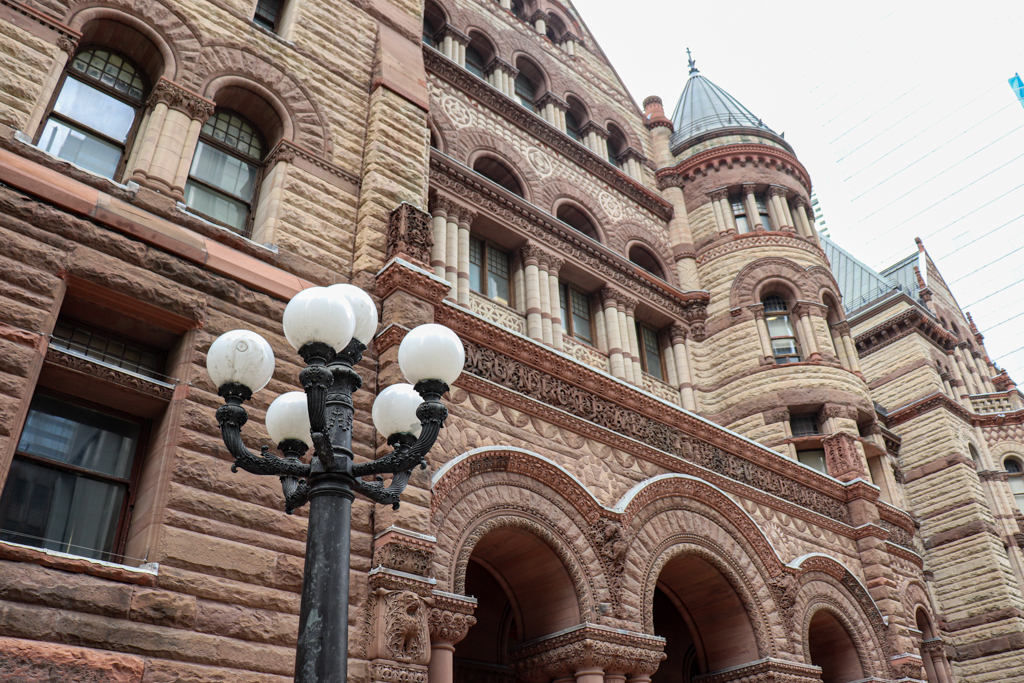
A notable design of a Richardsonian Romanesque heritage building in Toronto would be the Toronto Old City Hall (1889) at 60 Queen Street West, Downtown Toronto, designed by architect, E.J. Lennox.
Annex Style (Unique to Toronto)
The Annex style is an architectural style unique to Toronto. It blends the boldness of Richardsonian Romanesque and elements of the Queen Anne style.
This was a style pioneered by Toronto architect, E.J. Lennonx. When Lewis Lukes asked Lennox to design his house back in 1886, Lennox felt that the smaller size of the city building lots like those in The Annex, would not be appropriate for the enormity of a traditional Richardsonian Romanesque design.
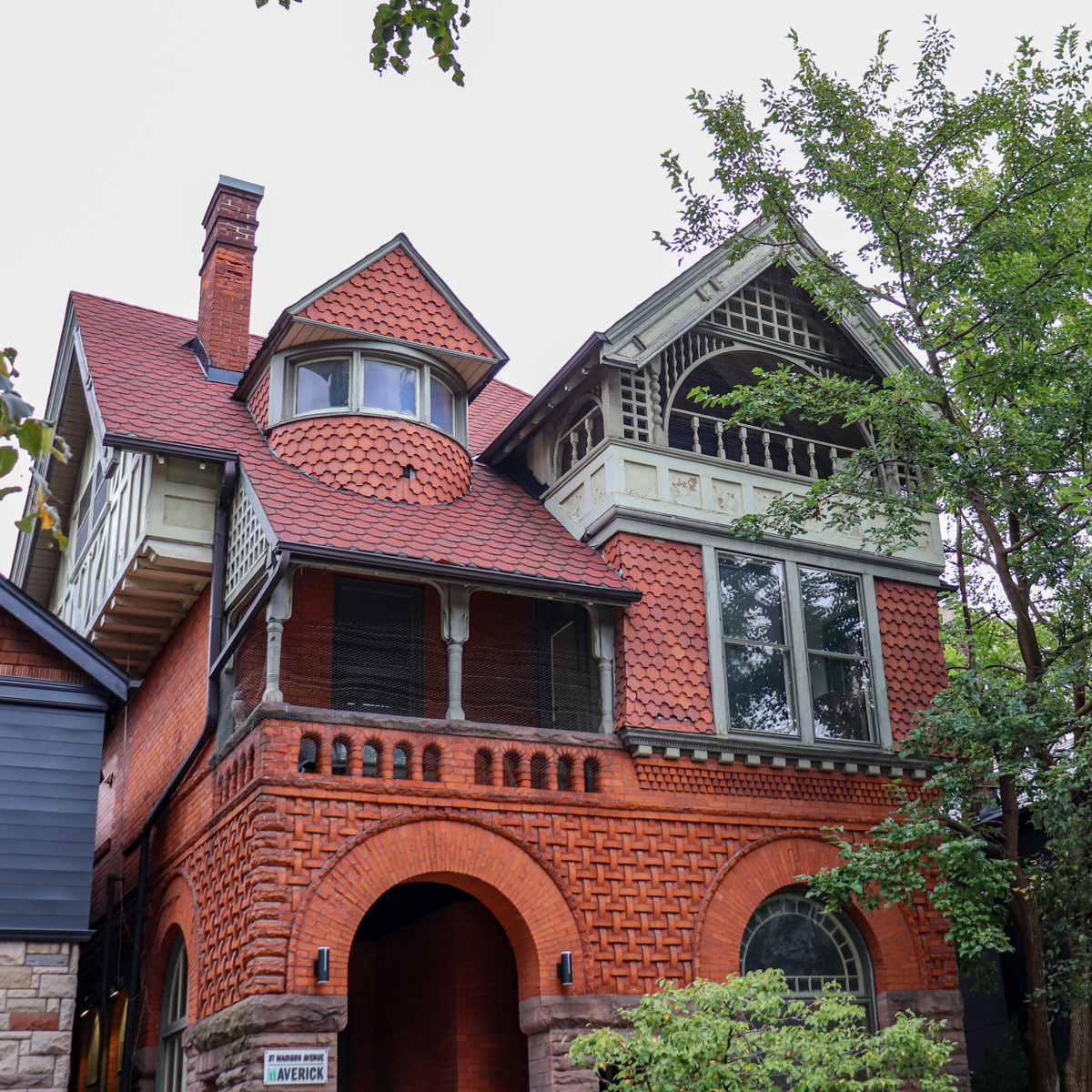
Therefore, Lennox reduced the design in scale. Lukes House (1887) at 37 Madison Avenue, The Annex still has the signature stone façade of a Richardsonian Romanesque heritage house. However, the house also features a semi-circular dormer with fish-scale shingles. There is also a porch on the 2nd and 3rd floor with some basket-weave brickwork above the arches.
The Lukes House has the heavy Richardsonian Romanesque vibe on the ground floor, from the 2nd floor up, it displays a more playful “Queen Anne” style.
Bay & Gable (Unique to Toronto)
Like the Annex style, Bay & Gable is also an architectural style unique to Toronto. The style was first coined by architectural historian Patricia McHugh in her book Toronto: A City Guide. Just like New York has its unique Brownstones, Toronto has Bay & Gable townhouses.
According to the book “Old Toronto Houses”, this style first appeared on Lowther Avenue west of Yorkville. Toronto was going through a population boom with thousands of new immigrant families arriving every year. Designed to a standard pattern, the Bay & Gable houses simply the whole building process, as each house as the same twenty feet wide dimension, and was built twenty feet from the sidewalk.
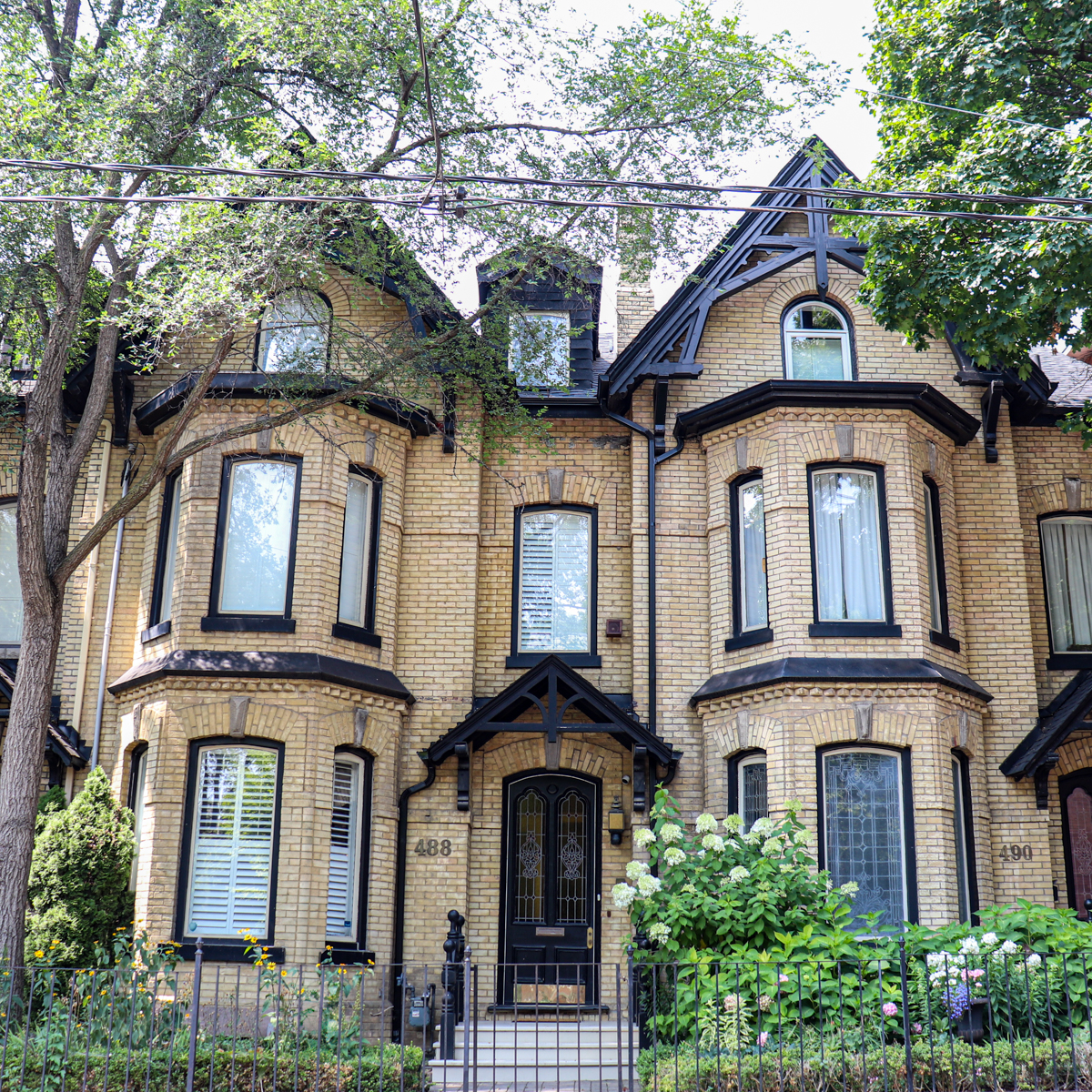
The bay window is of slender Italianate proportions, and the pointy roofline borrows hue from Gothic revival design. A notable example is the Bay and Gable row houses (1877) at 484-490 Ontario Street, Cabbagetown.
Tudor Revival
Originating from the “Old English” Tudor style, Tudor Revival style is relatively easy to spot. The style features half-timbering, steeply pitched roof, prominent cross-gable design with dark brown timber and white faux-chalk décor. The material used in a Tudor-revival style building is usually a combination of wood and stucco.
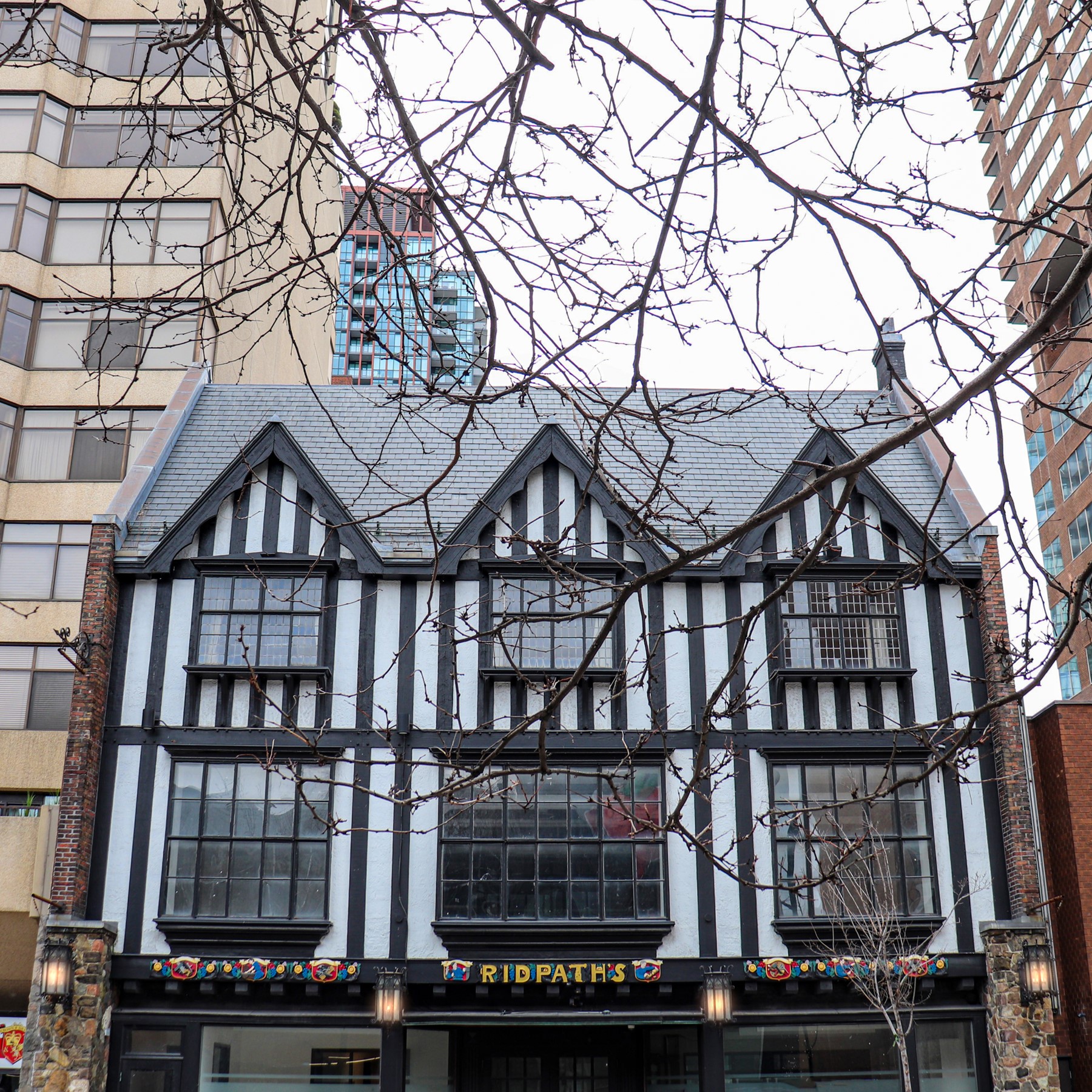
The Tudor Revival style takes inspiration from medieval England, and a notable example in Toronto is Ridpath’s Furniture (1928) at 906 Yonge Street, Yorkville. Mirroring a medieval dwelling in England, built in Tudor Revival style, the Ridpath building has the signature Tudor black timber décor with faux white chalk filling in between, forming a “zebra” pattern.
The horizontal beams above the store front have detailed illustrative cravings depicting the level of craftmanship from the artisans at Ridpath
Greek Revival
Also known as Classical Revival, this architectural expression stems from the temples of Ancient Greece. The signature style is its palatial columns and pillared portico.
The 1st Greek Revival was in the 18th century. This style enjoys a 2nd revival in the early 20th century in North America. Toronto heritage houses embracing this style are built with exaggerated details with tall and thick columns They project grandeur and boldness, a stark contrast to Arts & Crafts / English Cottage style, which was also popular at the time.
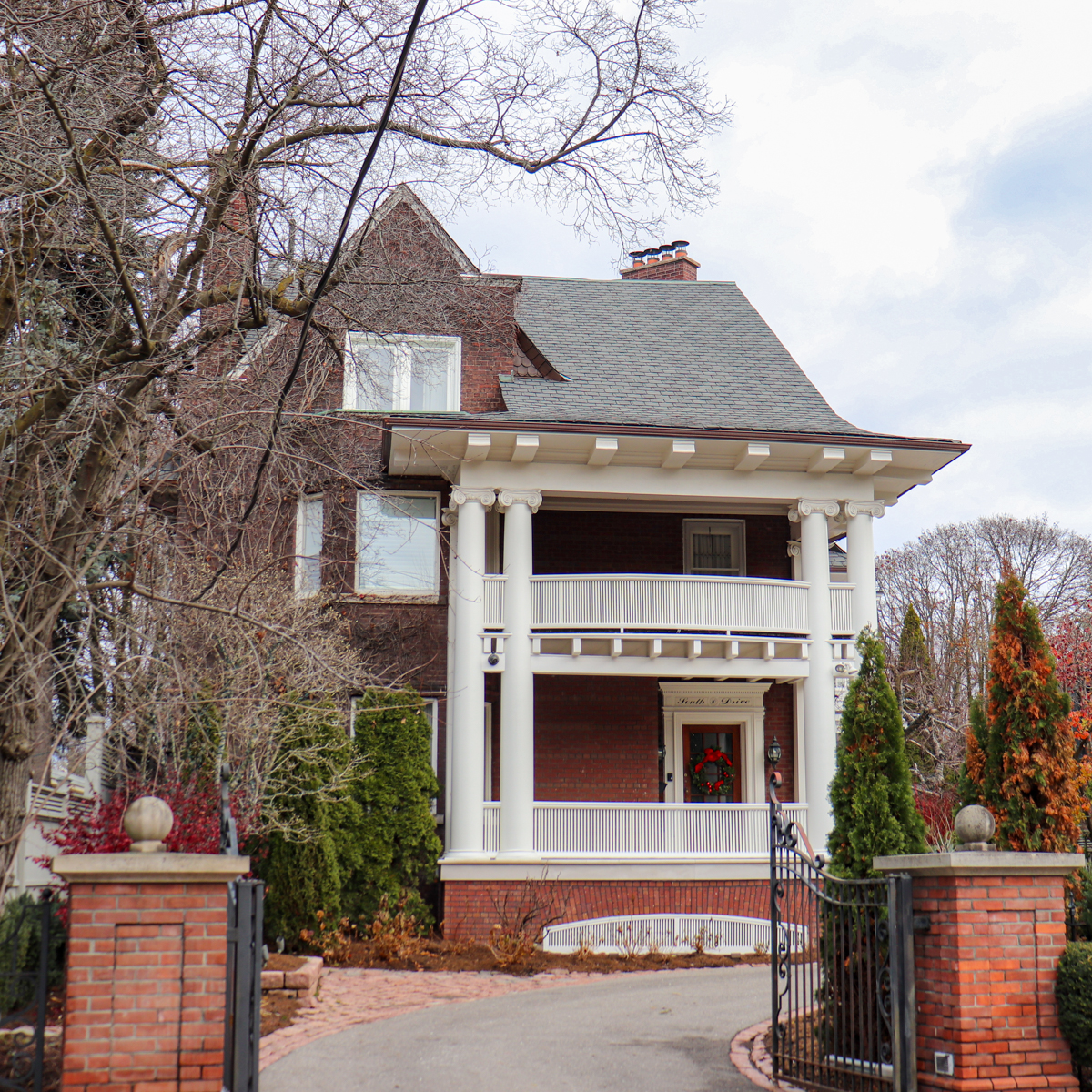
A notable example of a Greek Revival heritage house in Toronto would be Alex Reid House (1902) at 30 South Drive, Rosedale.
Arts & Crafts / English Cottage
When the Arts & Crafts became popular in Canada during the early 1900’s, skyscrapers were also starting to take off in downtown. Interestingly, people still preferred the warmth of the quintessential “English Cottage” after work.
This style of architecture was inspired by Englishmen, John Ruskin, who believed the use of natural materials and blending in with the surroundings would create harmony within society. Another Englishmen, Wiliam Morris, sought to counteract the soulless impersonality of the machines from the industrial era. The Arts & Crafts style focus on using locally sourced materials. A notable architect that adopted the style was Eden Smith, who was the main designer behind Wychwood Park.
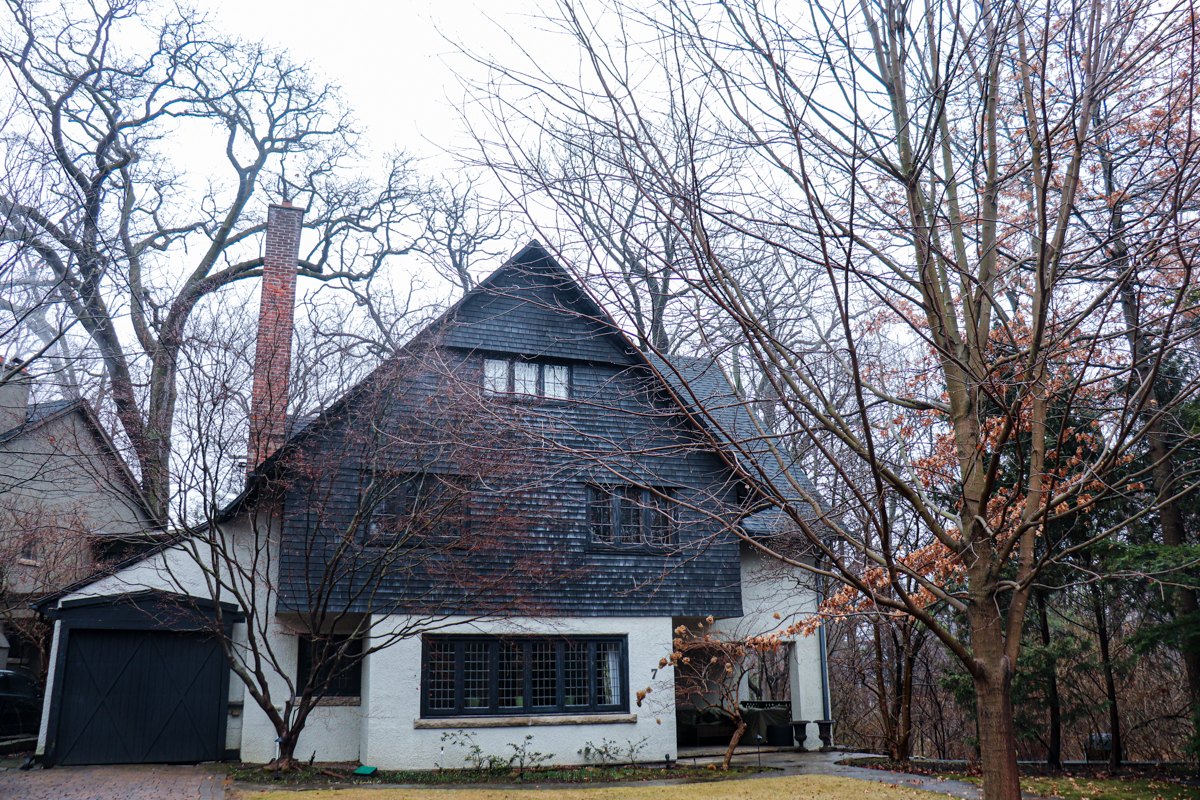
At Wychwood Park, English Cottages were built in a very elaborate scale. A notable example is Howell House (1911) at 7 Wychwood Park. The use of white stucco, exposed timbers and steep gables, give the house a rustic look.
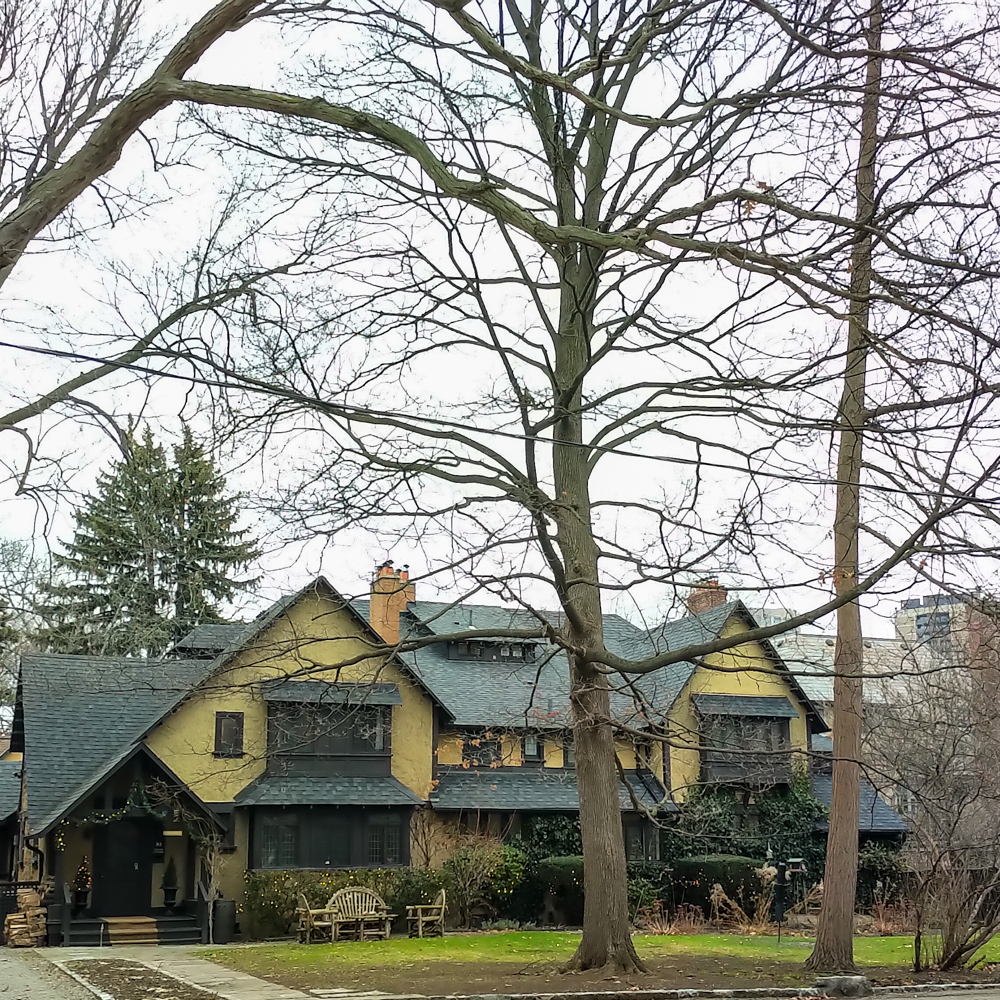
Another example of a Toronto heritage house built in English Cottage style is Upland Cottage (1906) at 81 Wychwood Park by architect, George Reid. The cream-colored stucco, and irregular gable hides the width of the house. With its Shakespearean walled garden, it is an English Cottage design in the most elaborate scale.
Edwardian
The style emerged during the reign of King Edward VII (1901-1910). It is a symmetrical design with less detailed ornate styles than Victorian style.
The bay windows are often large and rectangular with molded cornices. The materials are usually light in color. The rooflines often feature wide eaves and decorative corbels underneath.
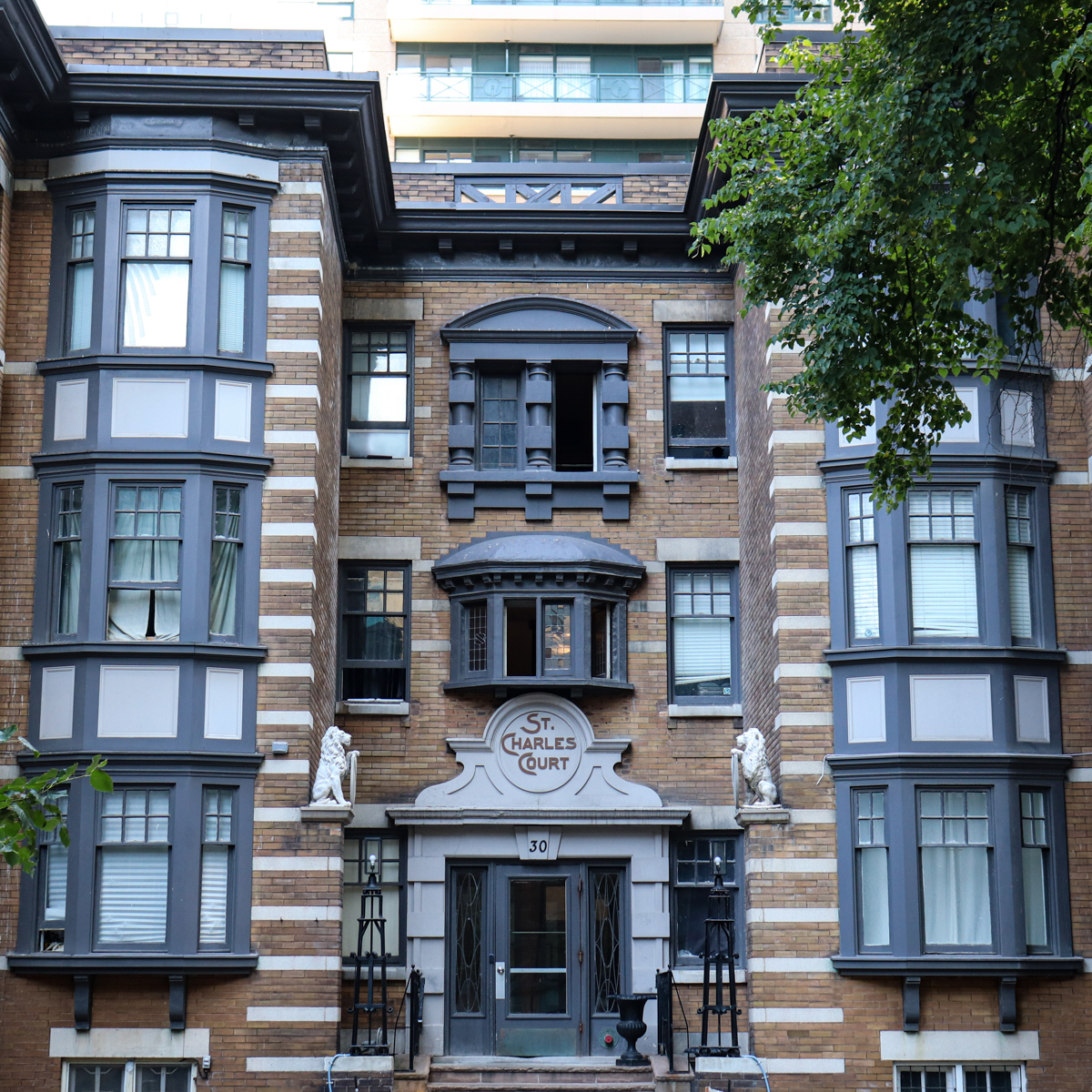
A notable example of an Edwardian heritage housing apartment in Toronto is St. Charles Court (1915) at 30 Charles Street East. Dwarfed by skyscrapers around it, this century old Edwardian apartment still feels special, if not even more so now. It was built during a time when architects like Eden Smith and E.J. Lennox were coming up with iconic detached houses. It was also a time when apartments such as St. Charles Court were built as grand and elegant as the detached houses around them.
Art Deco
Compared to the heavily ornate style of Victorian era, Art Deco style focuses on clean, straight lines and geometric forms. Its ornate element comes from its decorative motifs often inspired by exotic influences such as Egyptian, Aztec and African art in various sunburst, floral and plant-like patterns.
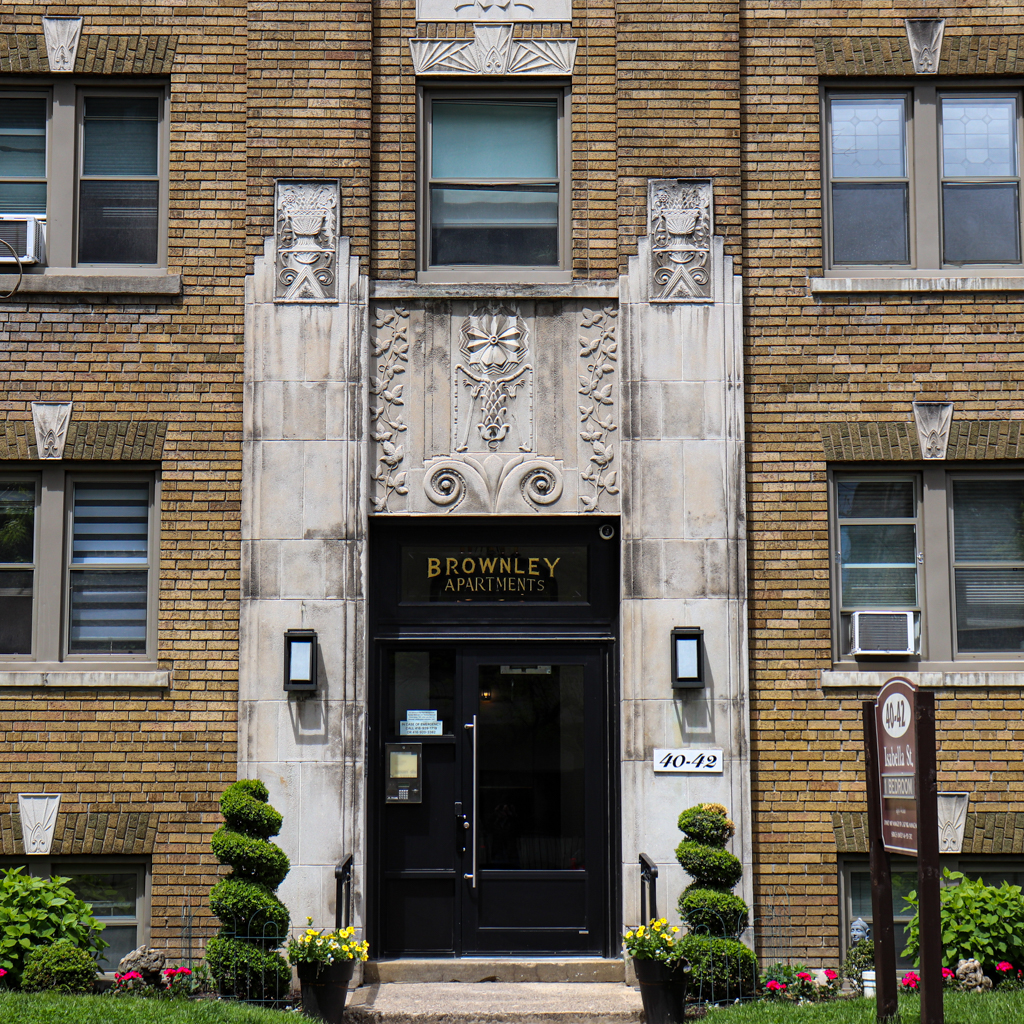
A notable example of an Art Deco heritage housing apartment in Toronto would be Brownley Apartments (1931) at 42 Isbella Street.
Streamline Moderne
Although closely related, Streamline Moderne is a more minimalized form merged from Art Deco in the late 1930’s, featuring simpler lines, smoother curves and even more geometric shape.
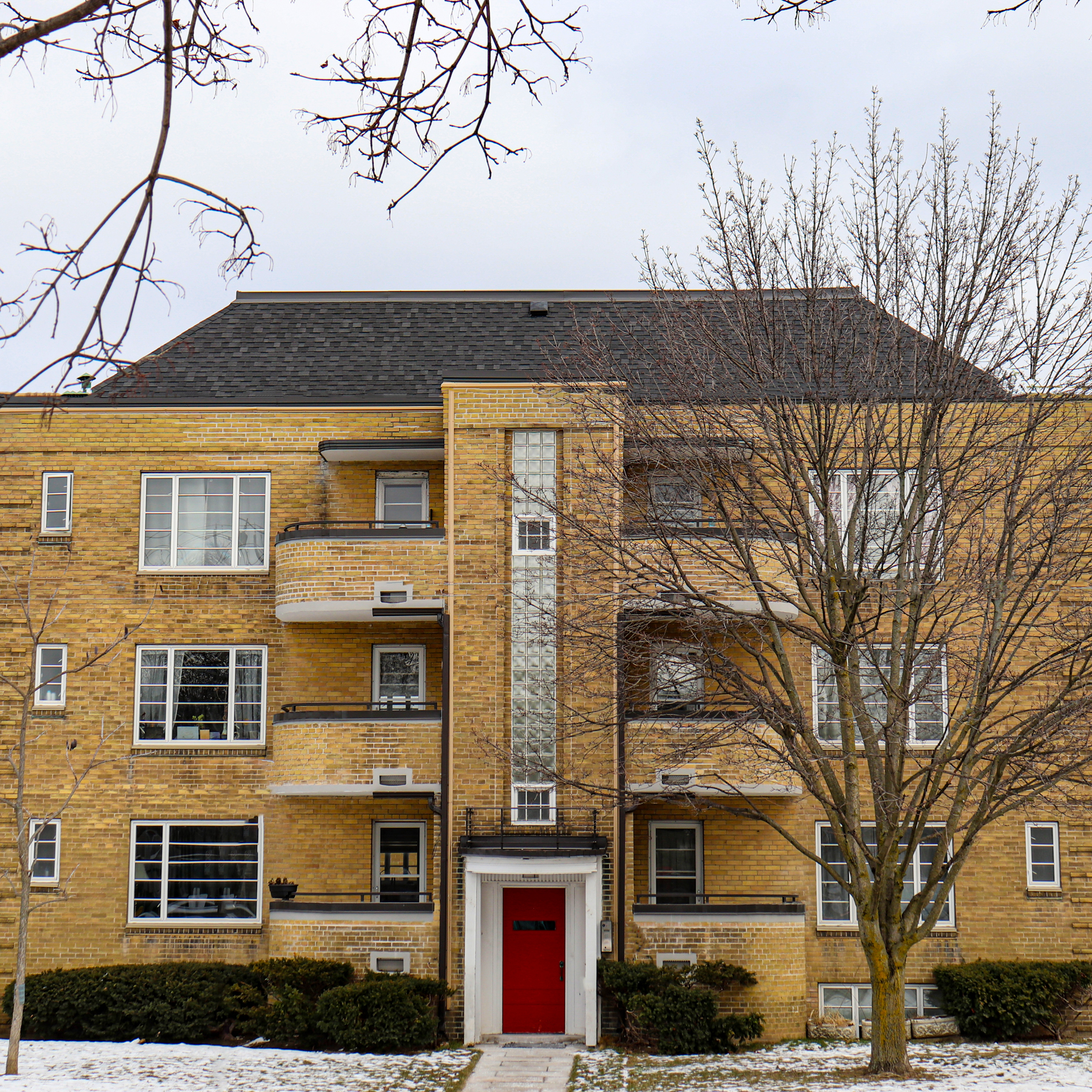
A notable example of Streamline Moderne heritage housing building would be Garden Court Apartments (1941) at 1477 Bayview Avenue. As an evolution of the art deco style, with a focus on minimizing ornamentation, emphasizing horizontal lines, adding aerodynamic elements like the round curved balconies and airplane style port side windows, liberal usage of architectural glass, like the tall strip stairway window made from glass bricks, the Garden Court is a timeless design. As the name suggests, the housing compound has a huge communal garden in the middle, with the aim to blur the concept of front / backyard detached house living with the convenience of being close to downtown.
 Prev Post